
Dream Golf, Ranked and Explained: The Company That Brought Scotland to America
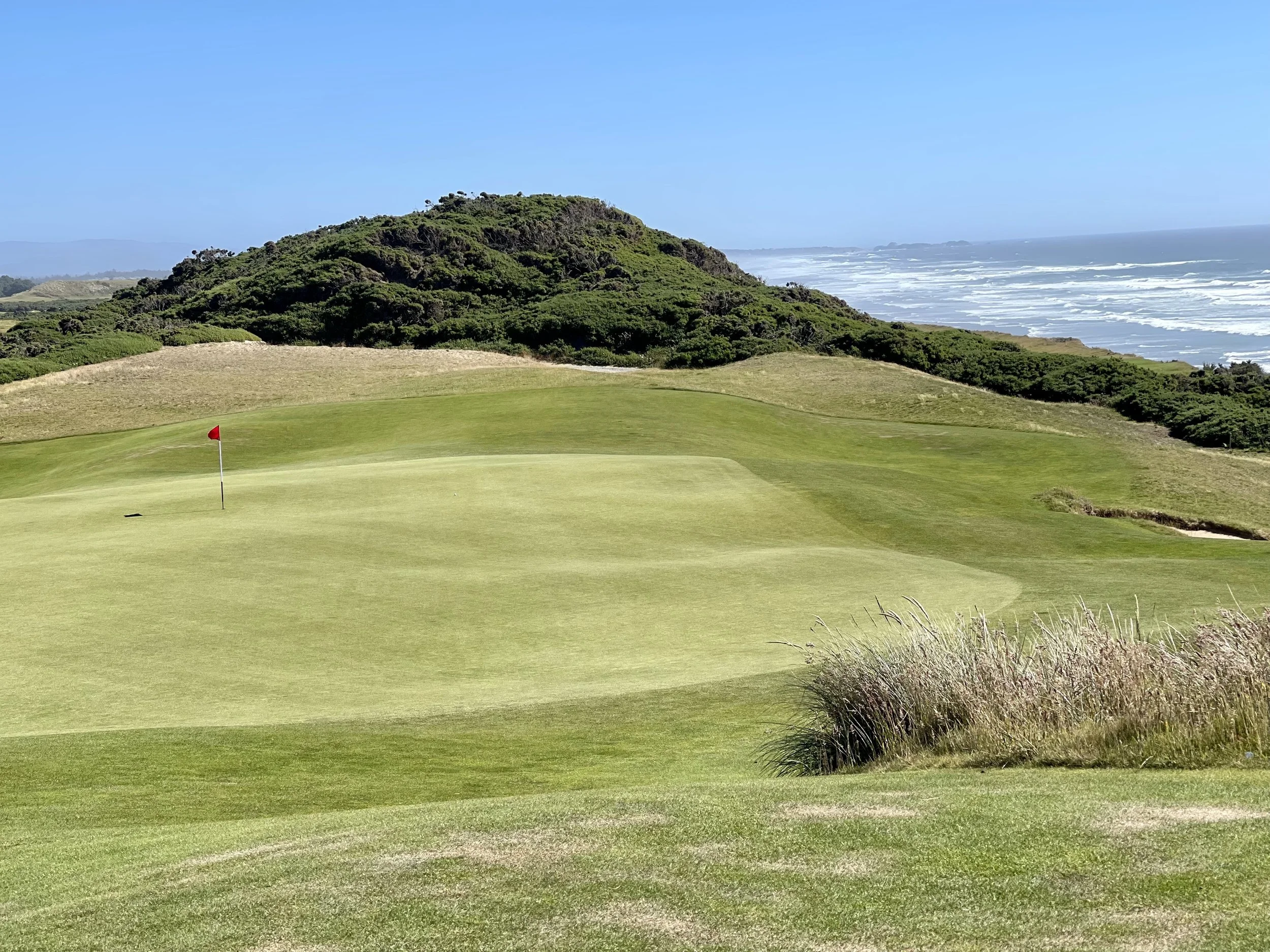
Golf at Bandon Dunes Golf Resort
I've played seven courses in Scotland, the Old Course's neighbors included, and I've made five trips to Bandon Dunes. So when I tell you that Bandon's courses belong in the same conversation as the best of Scotland, it isn't patriotism or a hot take manufactured for clicks. It's a verdict from someone who keeps buying plane tickets in both directions. And it's really a verdict about one company: Dream Golf, the Keiser family enterprise that took the Scottish idea of golf, remote land, firm turf, wind, walking, and planted it in American sand.
If you've heard of Bandon Dunes but not Dream Golf, you know the flagship, not the whole portfolio. Here's the whole map, every course explained, plus what's opening next, because this company is in its most ambitious stretch ever, and the booking calendars for its new properties are already running.
What Dream Golf actually is
Mike Keiser made his money in greeting cards and spent it on a conviction: that American golfers would travel to the middle of nowhere for the kind of golf Scotland takes for granted, walking-only, caddie-friendly, built on sand by architects given freedom and told to follow the land. Everyone said remote wouldn't work. Bandon Dunes opened on the Oregon coast in 1999, four hours from a major airport, and became the most influential American golf development of the modern era. Today Dream Golf is run by his sons, Michael and Chris Keiser, and the model hasn't changed: find extraordinary sand, hire the best minimalist architects alive, build lodging that serves the golf rather than upstaging it, and let the pilgrimage come.
The portfolio, as of this writing: two open resorts, two under construction with play already available, one Florida project on the horizon, and a Canadian cousin the family helped found. In order:
Bandon Dunes Golf Resort, Oregon (opened 1999)
The mothership, and where my Scotland claim was earned. Five championship courses, all walking-only, stacked on bluffs above the Pacific: Bandon Dunes (David McLay Kidd, 1999), the original, ocean holes you'll describe for years; Pacific Dunes (Tom Doak, 2001), routinely ranked the best public course in America and the one that most convincingly out-Scotlands Scotland; Bandon Trails (Coore & Crenshaw, 2005), inland through dunes and forest, the connoisseur's pick; Old Macdonald (Doak and Jim Urbina, 2010), a tribute to golf's first great American architect built at heroic scale; and Sheep Ranch (Coore & Crenshaw, 2020), no bunkers, all ocean, pure joy. Around them: the Preserve par-3, the Punchbowl putting course, and Shorty's, the newer short course, because Dream Golf believes the fun between rounds is part of the product.
After five trips, my honest one-line reviews live in the full Bandon breakdown, along with the only course-order rule that has earned its keep. And access has its own rules here: Bandon books through a quarterly priority drawing tied to lodging, four registration deadlines a year, covered date by date in the Planning Calendar.
Sand Valley, Wisconsin (opened 2017)
The heartland proof that the model travels. Four courses on prehistoric sand dunes: Sand Valley (Coore & Crenshaw, 2017) and Mammoth Dunes (David McLay Kidd, 2018), the big-shouldered openers; The Lido (2023), Doak's resurrection of C.B. Macdonald's lost Long Island masterpiece, rebuilt from archival data, the most fascinating golf-history project of this century; and Sedge Valley (Doak, 2024), a par-68 built on the English-heathland argument that great golf doesn't need 7,000 yards. Plus the Sandbox par-3.
I can vouch for the demand personally: booking our September 2027 trip thirteen months out, general availability was wide open and The Lido was down to its last tee time in a week-long span. We moved the whole trip to capture it. Sand Valley opens each season's bookings roughly nineteen months ahead, and The Lido fills first, and fastest, inside that window.
Rodeo Dunes, Colorado (public play opens 2027)
The next chapter, an hour northeast of Denver on prairie duneland that draws comparisons to the sacred Sand Hills of Nebraska. The first course is Coore & Crenshaw's; preview play for founders began in late 2025, tee-time booking opened in February 2026, and public play arrives in 2027, with a second course by longtime Coore & Crenshaw shaper Jim Craig behind it and room on the property for as many as six. For planning purposes, the year-out rule goes west: a new Dream Golf course's first public season is exactly the kind of tee sheet that rewards booking the day the window opens.
Wild Spring Dunes, Texas (grand opening fall 2026)
East Texas, twenty miles north of Nacogdoches, two hours from Dallas and Houston, 2,400 acres of pine and sand. The Tom Doak course has been in preview play on its first eight holes since November 2025, the full eighteen holds its grand opening in fall 2026, and a Coore & Crenshaw second course is projected for 2027. Keiser has compared the terrain to Pinehurst and Pine Valley, which is not a comparison that family makes carelessly.
And on the horizon: Florida
Mentioned quietly in Dream Golf's own founders-program materials: Old Shores, a Florida project in development. Details are scarce and I won't pretend otherwise, but a Dream Golf property in the winter-golf state is worth a bookmark, and this page will be updated as it firms up.
(A note on the cousin: Cabot Cape Breton in Nova Scotia, home of the world-top-ten Cabot Cliffs, was co-founded by Mike Keiser with Ben Cowan-Dewar, and it carries the same DNA, though Cabot has since grown into its own independent collection. And one common mix-up worth settling: Streamsong, Florida's great links-style resort, is not a Dream Golf property, different owners, same spirit, and we love it too.)
The Scotland question, answered honestly
So: did they actually do it? Is this Scotland in America?
Here's what Dream Golf imported faithfully: the walking, the caddies, the wind, the firm sandy turf that lets the ground game live, the architecture that follows land instead of bulldozing it, and, maybe most Scottish of all, the pilgrimage, the sense that the remoteness is part of the point. On pure golf, course for course, I'll say it plainly: Pacific Dunes and its siblings belong with the best I played in Scotland, and I say that having loved the originals.
And here's what can't be imported, and I'd be selling you something if I claimed otherwise. There's no thousand-year-old town outside Bandon's gates, no pub where your bartender grew up beside the 16th green, no Sunday evening when the most famous course on earth closes so the whole town can walk it. Scotland's golf is stitched into places; Dream Golf's is gathered into resorts, exceptional ones, but resorts. The honest summary from someone who books both: Dream Golf built the golf. Scotland is still the game's home. A serious golfer's life has room for both trips. I keep booking both.
Planning a Dream Golf trip
The access mechanics differ by property and they reward homework: Bandon's quarterly drawings, Sand Valley's nineteen-month windows and the Lido squeeze, Rodeo's first public season, Wild Spring's staged opening. All of it is tracked, with dates, in the Golf Trip Planning Calendar, and the lead-time table there will tell you exactly how far ahead your target property books. If you want the trip built properly, courses, order, lodging, caddies, and the drawing strategy, that's what the consultation is for: ninety minutes, your group, and a written plan you keep either way.
I'll be at Sand Valley in September 2027, three nights with The Lido on the card, and the trip report will land here after I've played it. The rest of the portfolio gets the same treatment as I get to it, and this page will be updated as Rodeo Dunes, Wild Spring Dunes, and whatever comes next open their doors.