
A 16-Day Scotland Golf Trip: 8 Rounds, Planned Without an Operator
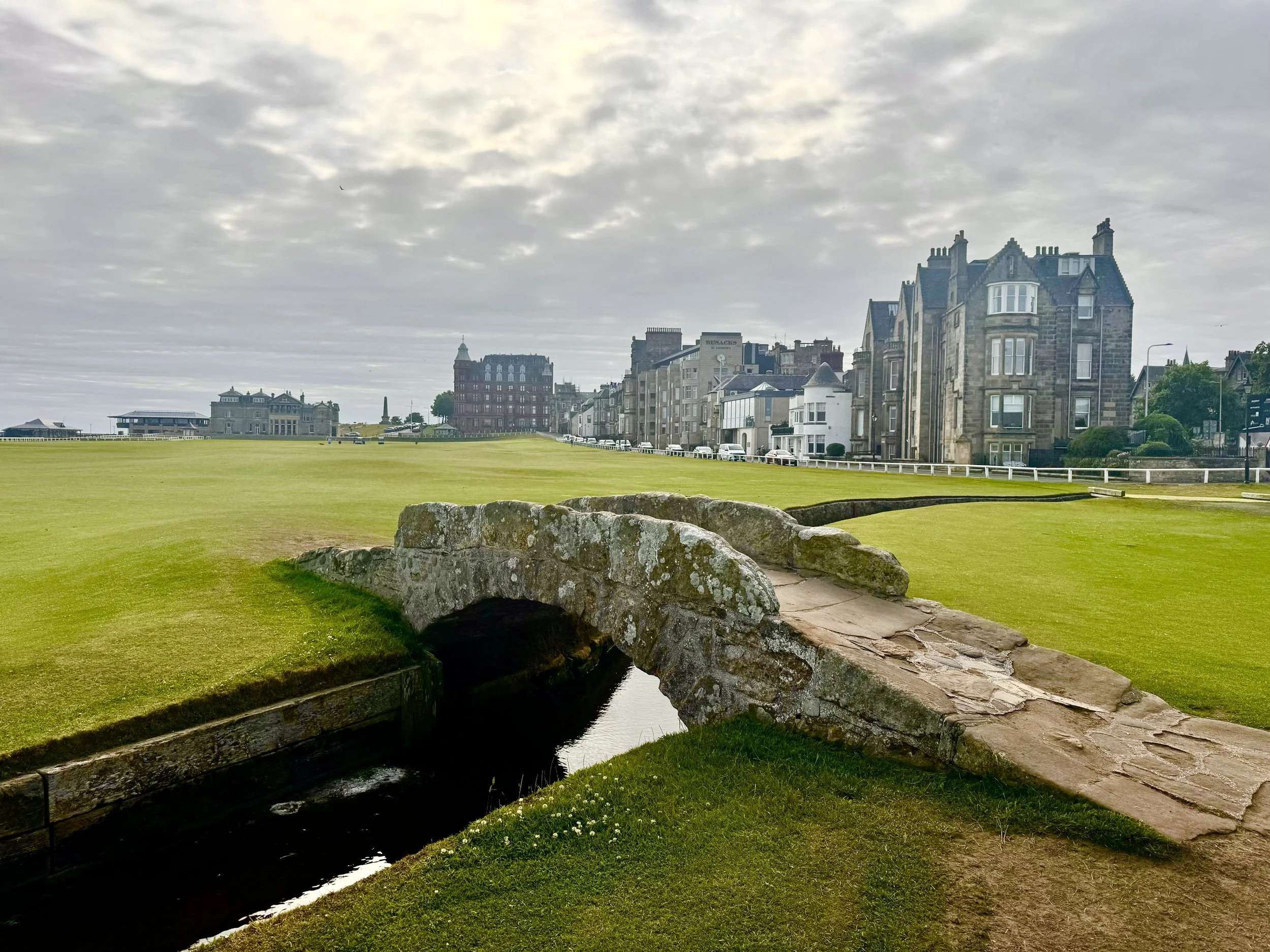
The famous Swilcan bridge on #18 at the Old Course at St. Andrews
Sixteen days. Eight rounds. Royal Troon, Turnberry, North Berwick, Dunbar, Carnoustie, Kingsbarns, and the New Course at St Andrews twice. My partner and I took the trip together. I planned every tee time, transfer, hotel, and dinner myself, without a tour operator, because no operator plans a trip the way its owner would.
This is the complete itinerary, annotated with the reasoning behind it. Not just where we went, but why the days sat in the order they did, what things cost, and what I learned that the brochures will never tell you. If you're planning your own version, steal freely. If you'd rather someone plan it for you the way I planned this one, that's what Linksbound does.
The shape of the trip
Before the day-by-day, the logic, because the route determines everything that follows.
Scotland's golf clusters into regions, and picking yours is decision one. Ayrshire, on the southwest coast, holds Open Championship history: Troon, Turnberry, and Prestwick, where the Open began. East Lothian, the coastline east of Edinburgh, is golf's original linksland: North Berwick, Muirfield, Gullane, a dozen courses along twenty miles of shore. Fife means St Andrews and its orbit: the Links Trust courses, Kingsbarns, Crail, Dumbarnie, with Carnoustie and the Angus coast just across the Tay. And then there are the regions we didn't choose this time: Aberdeenshire and its giant dunes (Cruden Bay, Royal Aberdeen), the Highlands pilgrimage (Royal Dornoch, Nairn, Cabot Highlands), and remote Machrihanish out on the Kintyre peninsula.
We chose Ayrshire, East Lothian, and Fife for one reason: the courses. My must-play list, Troon, Turnberry, North Berwick, Carnoustie, St Andrews, Kingsbarns, lives in exactly those three regions, and they happen to chain together in one clean west-to-east drive across the country's lower half. The Highlands and Aberdeenshire demand real northern mileage and deserve a trip of their own someday. That's the order of operations every Scotland itinerary should follow: pick the courses you can't leave without, and let their map decide your route.
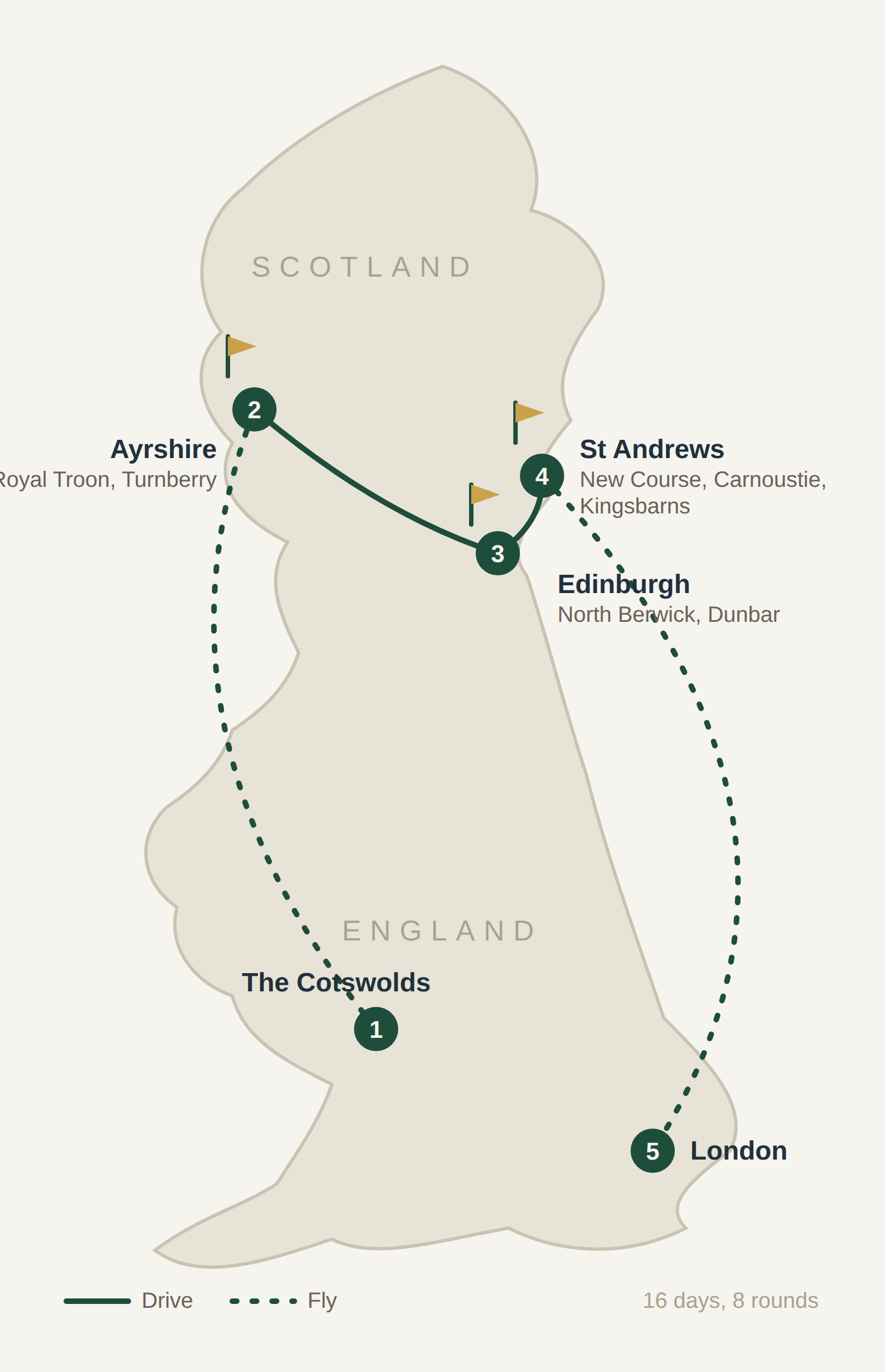
The trip ran England first, then Scotland west to east: the Cotswolds for the landing, then Ayrshire (Troon, Turnberry), then Edinburgh and East Lothian (North Berwick, Dunbar), then Fife and Angus (Carnoustie, St Andrews, Kingsbarns), and out through London. Three principles shaped it:
Land soft, then play. We gave ourselves three non-golf days in the Cotswolds before the first tee. No golf, by design. A jet-lagged opening round shortchanges a course you've waited your whole life to play. The golf started when we were ready for it.
Follow the geography, never backtrack. Ayrshire sits on Scotland's west coast, East Lothian and Fife on the east. Playing them in that order meant the driving always moved the trip forward: Glasgow to Turnberry, Turnberry to Edinburgh, Edinburgh to St Andrews, St Andrews to the airport. Total Scottish driving came in around 400 to 450 miles across ten days, with the coast-to-coast move from Ayrshire to Edinburgh the longest single haul of the trip.
Base camps, not nightly moves. Three bases in Scotland: two nights at Turnberry, four in Edinburgh, four in St Andrews. Unpacking twice in ten days instead of seven times is the difference between a trip and a logistics exercise. Every course we played sat within 45 minutes of a base.
And one verdict the planning couldn't have produced, only the trip could: this is the full two-week version, and if yours is shorter, prioritize Fife. Ayrshire has the marquee names and I'm glad we went, but the best golf trip on this island is the one radiating out of St Andrews: the New Course, Kingsbarns, Carnoustie forty minutes up the coast, and the town itself, which is the only place in the world where the golf and the life around it are the same thing. Given a week instead of two, I'd land in Edinburgh and drive straight to Fife without a backward glance.
How far ahead should you book?
I started securing this trip more than a year in advance, and I'd do it again. The scarce resources are marquee tee times and hotel rooms in the golf towns: visitor books at the big-name courses generally open about a year out and the best summer slots go early, and the good hotels in St Andrews are a competition of their own. My working order: choose your dates, regions, and must-play courses twelve-plus months ahead, request tee times the moment the books open, lock the hotels as soon as the golf confirms, then layer in the car, internal flights, and transfers behind them. Dinners can wait until a few weeks out. The one part of Scotland that rewards spontaneity instead of lead time sits in St Andrews itself: the Old Course ballot and the New Course's day-of culture run on presence, not planning, and we'll get to both.
Two-week Scotland golf trip: 8 rounds, planned without an operator
Leg one: the Cotswolds (Days 1 to 3)
We flew LAX to London and drove straight into the Cotswolds to stay with friends: a long hike through the countryside, lunch at The Pig, a Thames-side walk, slow dinners. No golf clubs left their travel covers.
Planner's note: the landing leg. Every great golf trip I build starts with a question nobody asks: when should the golf start? The answer is almost never day one. Three days of adjusting to the time zone, eating well, and remembering you're on vacation made the first tee shot at Troon feel like a beginning instead of an obligation. Yours can be anywhere; the point is the exhale before the golf begins.
Leg two: Ayrshire (Days 4 to 6)
Day 4 was the trip's one genuinely brutal move: a 4:30am chauffeur to Birmingham, an early flight to Glasgow, straight into the rental car, and the drive south to Turnberry by mid-afternoon. Brutal, and worth it.
Planner's note: fly the internal leg. Driving the Cotswolds to Ayrshire is six-plus hours. Flying Birmingham to Glasgow with golf bags cost £302 for two and bought us an entire afternoon at Turnberry. When a domestic flight saves four hours of driving, take it, and confirm the golf bag policy at booking, not at the counter.
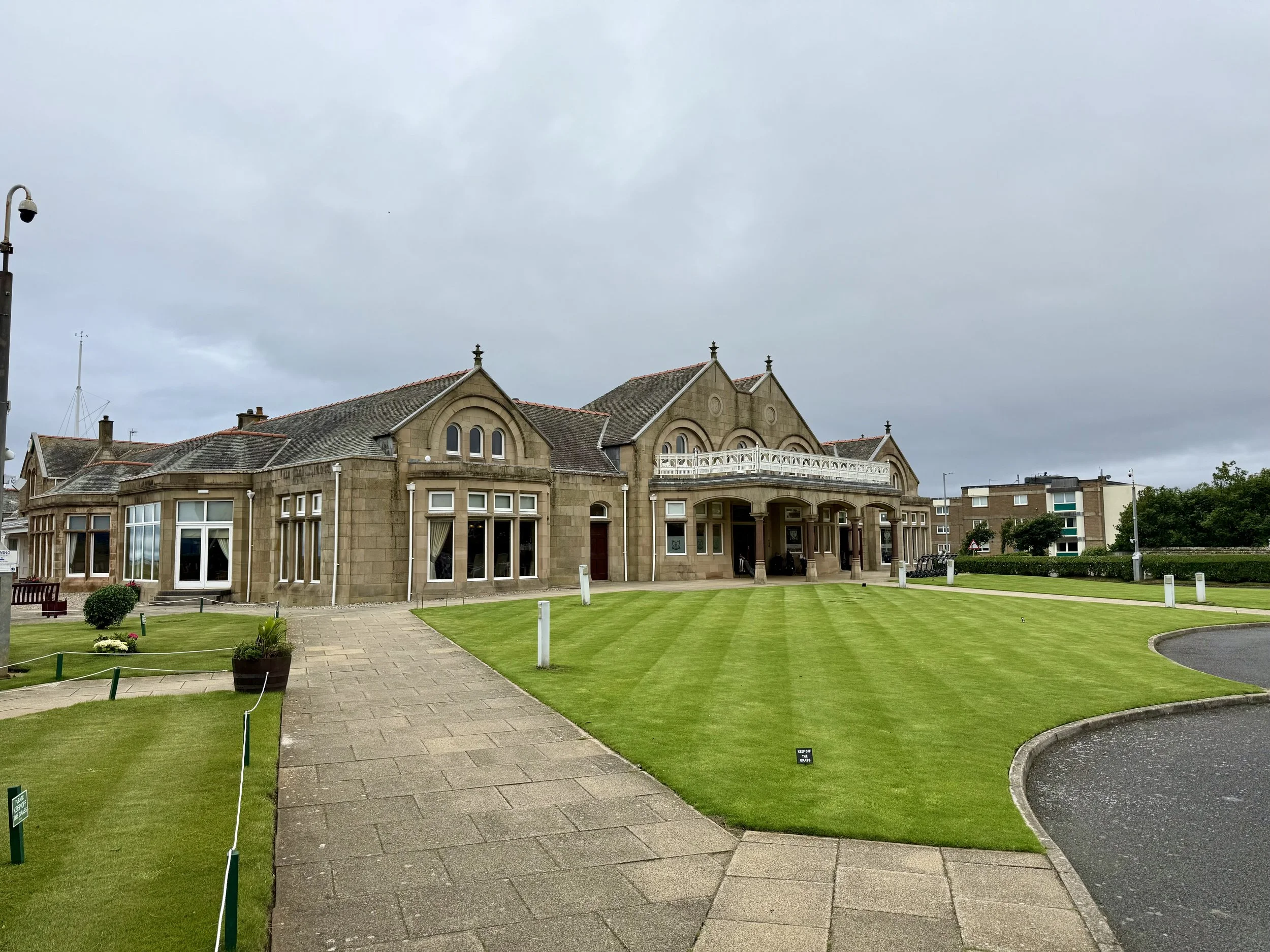
The clubhouse at Royal Troon
Day 5: Royal Troon, 11:10am. Ten Open Championships, most recently 2024, and the Postage Stamp, which is every bit the examination its reputation promises. Troon has 99 bunkers, and you will make the acquaintance of more of them than you planned to. There's something almost eerie about the place, an old, serious quiet that suits it. The late-morning tee time was deliberate: no alarm-clock golf on the first playing day.
Two practical notes: the driving range is a cart ride away, with shuttles leaving and returning every 20 minutes, so build that into your arrival math. And get inside the clubhouse before or after; the memorabilia collection rewards the detour.
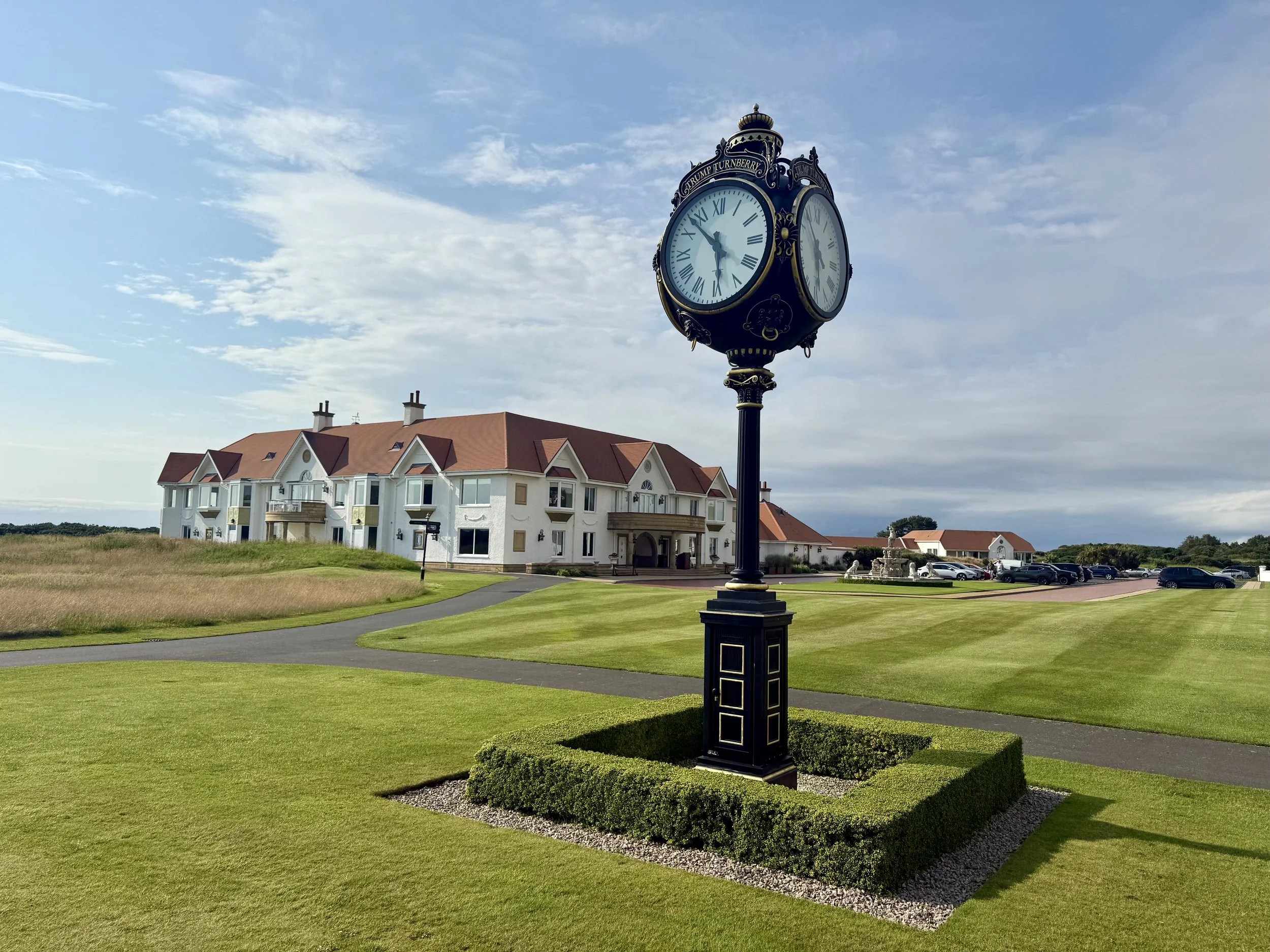
Turnberry’s pro shop and clock
Day 6: Turnberry's Ailsa Course, 10:09am, then Edinburgh. Staying on property meant a two-minute commute to one of the great settings in golf, Bruce's Castle along the cliff edge, Ailsa Craig offshore. The round opens with a complimentary scotch on the first tee, which is either a welcome or a warning, and it was excellent either way. Whatever you do, stop at the lighthouse after the 9th; the sausage sandwich there is the thing people talk about, and they're right to. We checked out before the round, loaded the car, and drove to Edinburgh straight from the 18th, which turned a travel day into a golf day with a commute.
Resort notes: a bagpiper plays the grounds every late afternoon, which never stopped being great. The range is easy to reach, many bays are covered, and the Trackman screens are a genuine bonus, adding some juice to a pre-round session. Leave your clubs with the bag staff rather than hauling them to the room, and the pitch and putt is a fun hour if your legs have one in them.
Planner's note: stay where you play, once. Turnberry was the trip's one on-resort splurge, and it earned its rate three times over: the walk to the first tee, the checkout-then-play move that saved a day, and the resort guest rate on the Ailsa, £425 a head instead of the far steeper visitor fee. You don't need to sleep beside every course. You need to do it at the right one.
Leg three: Edinburgh and East Lothian (Days 6 to 9)
Four nights at the Radisson Collection on the Royal Mile. One practical note before anything else: parking there is self-park in a very tight garage, which got old quickly on a trip built around a car. If you're driving, it's worth weighing before you book; we ended up leaving the car parked except on golf days. Edinburgh itself was the trip inside the trip: the Castle, Holyroodhouse, and dinners at Monteiths and Chop House.
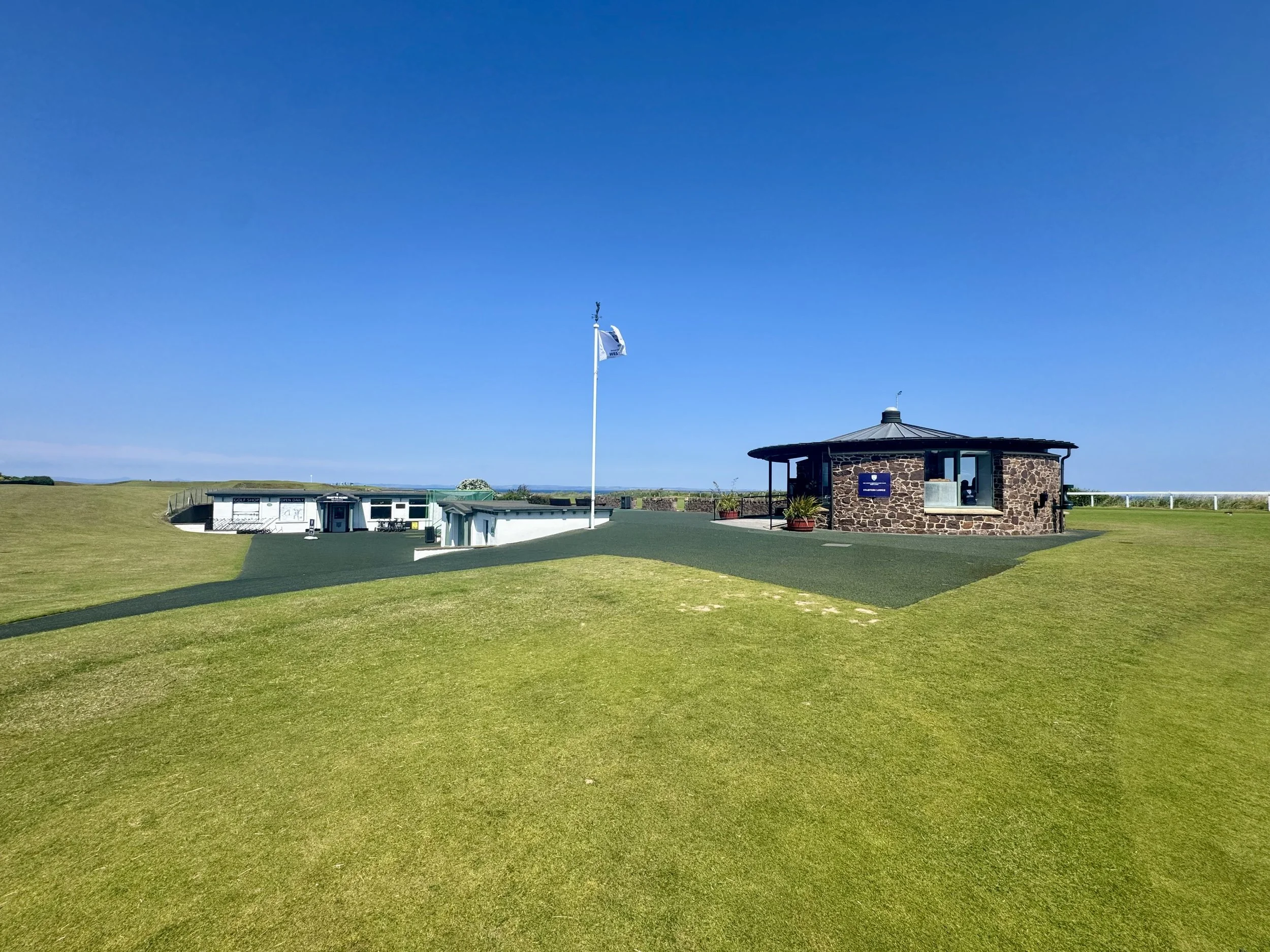
The starter hut and pro shop at North Berwick
Day 7: North Berwick, 1:00pm. Thirty-five minutes east of the city and one of the most characterful links on earth: the wall, The Pit, the Redan, the Firth of Forth glittering behind all of it. And here's what set it apart: of all eight rounds on this trip, North Berwick was the one place that truly made you feel like a member for the day. It was something special. The caddies are half the entertainment, there's a complimentary gin or beer waiting after the round, and the move almost nobody makes is heading upstairs in the clubhouse, hang a left, up the stairs, and you'll see why. The pro shop deserves a browse too.
Two traps worth knowing. First, the booking one: North Berwick doesn't take visitor times on Fridays or Saturdays, which quietly dictated the architecture of this entire leg. Second, the parking one: the machines stop charging at 4:00pm, but Americans can't use the parking app because it requires a UK phone number confirmation; tap to pay at the machine and enter your license plate instead. And if you want to warm up, the range is genuinely far away, a drive and then a walk. You've got to want it.
Day 8: no golf, all Edinburgh. On purpose, between two golf days.
Day 9: Dunbar, 12:06pm. Founded 1794, forty-five minutes from the city, and here's the straight answer the trip taught me: a pleasant round I'm glad I played once, and one I probably wouldn't play again. That's less a knock on Dunbar than on the company it kept: it's an enjoyable tier-two course on a trip where every other round was tier one. The greens are honest surfaces with very little slope, the history is real, and the day was genuinely enjoyable. We shared the course with a touring pro that day, so it clearly has its seekers; it just didn't earn its slot against this field.
A timing note for anyone going anyway: as of summer 2026 the club is playing out of a temporary clubhouse while the new one is built (expected to open in October), the routing has shifted so the old 2nd now plays as the 1st, and the range is closed until a new full-length one opens in spring.
Planner's note: the base decision, and the one I'd take back. Basing in Edinburgh made sense on paper: the non-golfer gets the best city in Britain outside the door, and the golfer drives 40 minutes instead of the group relocating twice. In practice, I wouldn't do it again. Downtown Edinburgh in summer is chaos: crowds, noise, parking misery, a city working hard around you when what a golf trip wants is exhale. The move I'd make instead: base at the Marine in North Berwick, a beautiful, quietly high-end town right on the links, with Dunbar twenty-five minutes away and Edinburgh still close enough for a chosen day rather than a constant condition. Same golf, different nervous system. The honest lesson for anyone building this leg: decide whether your trip wants a city with golf nearby, or golf with a city nearby. I planned the first and wanted the second.
Leg four: St Andrews and Angus (Days 10 to 14)
Four nights at Rusacks, and it was fantastic: the location is unbeatable, the rooms are beautifully appointed, and the rooftop bar overlooks the 18th of the Old Course, which is either the best or the cruelest view in golf depending on how your draw goes. Either way, get a drink up there and cheer the groups coming up 18; it never gets old, and half the fun is watching strangers try to two-putt the most photographed green in the game.
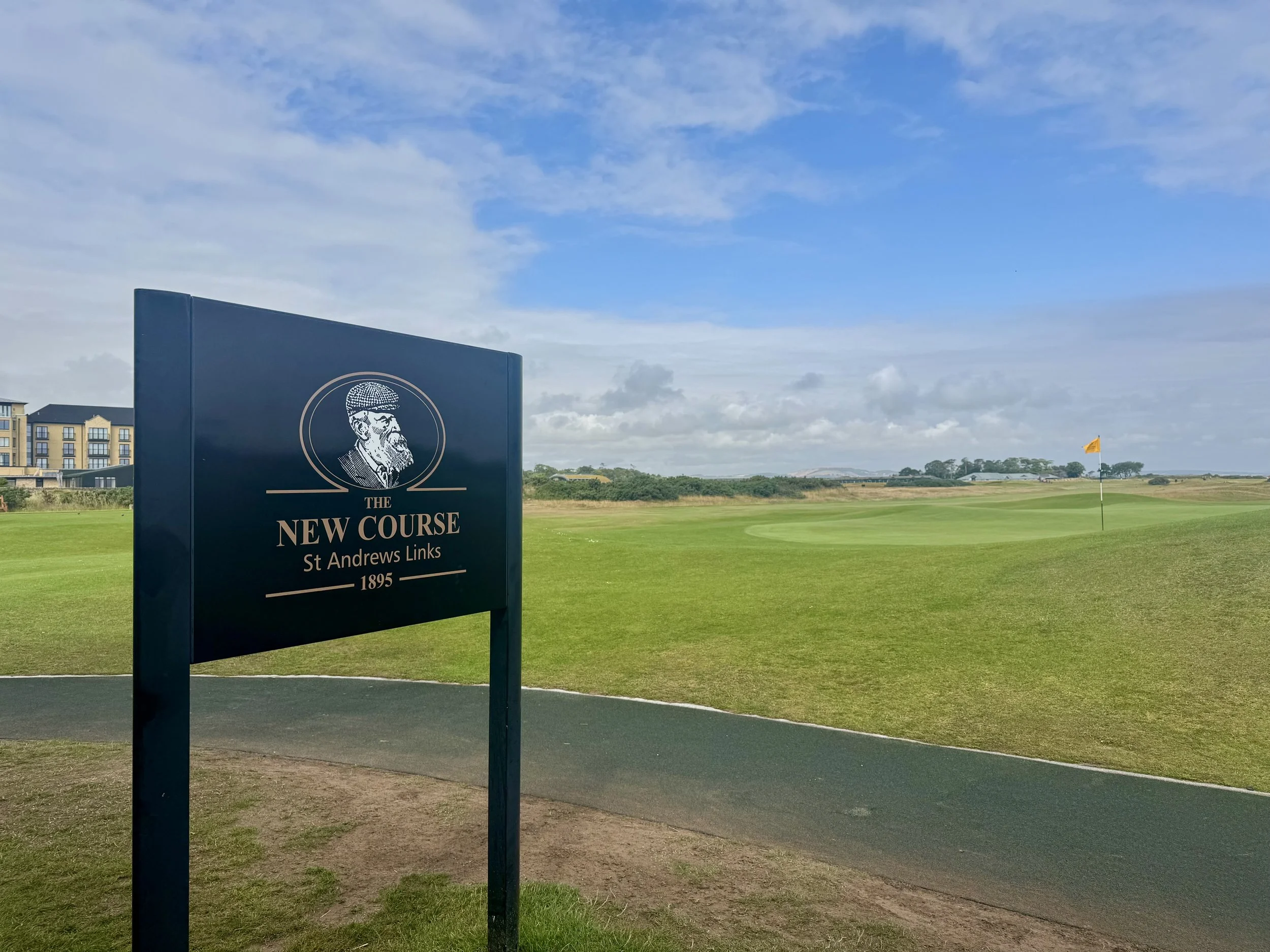
The New Course at St. Andrews
Day 10: arrival, and the New Course. We drove up from Edinburgh, checked in, and I walked onto the New Course that afternoon. Here's the thinking: the Old Course closes on Sundays, which most itineraries treat as a problem. I treated it as two openings. First, the golf: the New sits right beside the Old, holds a block of tee times for day-of walk-ons, and every caddie I asked on this trip, from Ayrshire to Fife, gave the same answer about the second-best course in town. Not the Jubilee. Not the Eden. Not the Castle. The New. Second, the pilgrimage: Sunday is the day to walk the Old Course itself, out on the fairways with the whole town, pictures on the Swilcan Bridge included. It's the only day of the week the most famous course in the world becomes a public park, and it might be the best non-golf hour in golf.
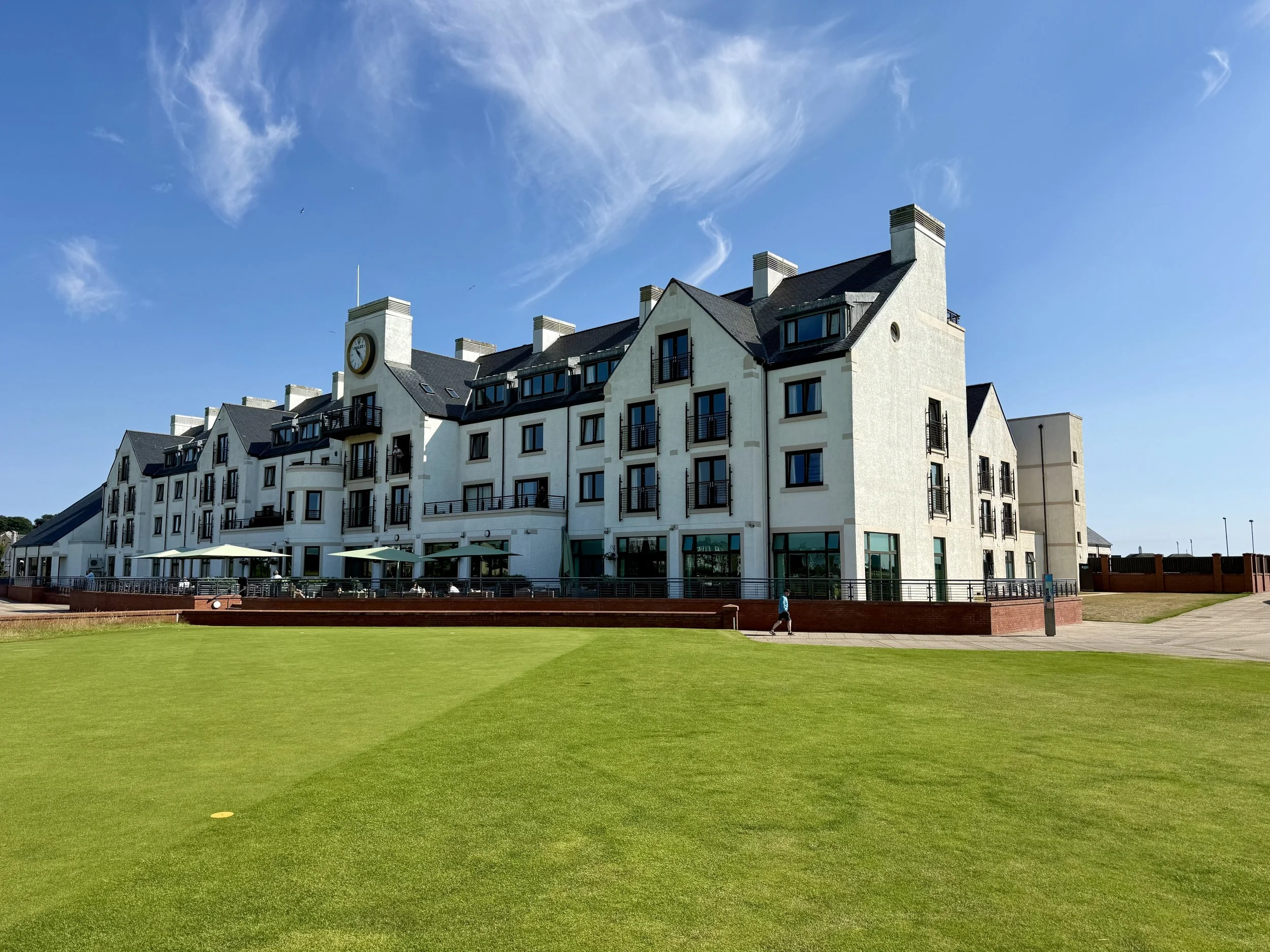
Carnoustie Golf Hotel and Spa
Day 11: Carnoustie, 10:30am. Forty minutes north, eight Opens, and the honest answer is that its reputation for difficulty is not marketing. The Barry Burn on 17 and 18 is a closing argument.
But here's what the reputation leaves out: Carnoustie is a warm, superbly run place. You meet your caddie at the bag drop and walk to the first tee together, the caddies wear their names on their vests, and nearly every group takes one, for good reason, since they help tremendously here. The greens were in terrific shape, the pace of play was outstanding, and the pro shop will engrave just about anything while you play. Know two things going in: there's no range, so arrive with whatever swing you brought, and the halfway house comes after the 10th, not the 9th.
Day 12: the singles draw, and the New Course again. Monday I entered the Old Course Singles Daily Draw, in person at the Links, anytime between 9am and 5pm for next-day play, drawn at 5pm sharp, results within the hour. It didn't break my way: number 43 on the standby list, which is a polite way of saying it was never happening. A staff member at the Links had told me the honest odds, about 10 percent, and she wasn't managing expectations, she was stating them. Here's what missing cost me: £322 for the two of us and nothing else. The New Course holds a block of times for day-of walk-ons, and I got on that way twice this trip. I took a 12:45 for the day, then deployed the oldest trick in St Andrews: loiter near the putting green and be pleasant to the starter. Ten minutes later he came out and slotted me in at 9:44 instead. The starter has more discretion over those day-of times than any website will tell you. It pays to be nice, and it pays to be nearby. The second round on the New was every bit as good as the first, even if my scorecard disagreed, and I had my whole afternoon back. That's the whole philosophy of a well-built St Andrews leg: the ballot is a lottery ticket, not a foundation. Build days you'd love either way, and the Old Course becomes a bonus rather than a hostage situation. Dinner at 18 at Rusacks, overlooking the course we didn't play, and it was still one of the best nights of the trip.
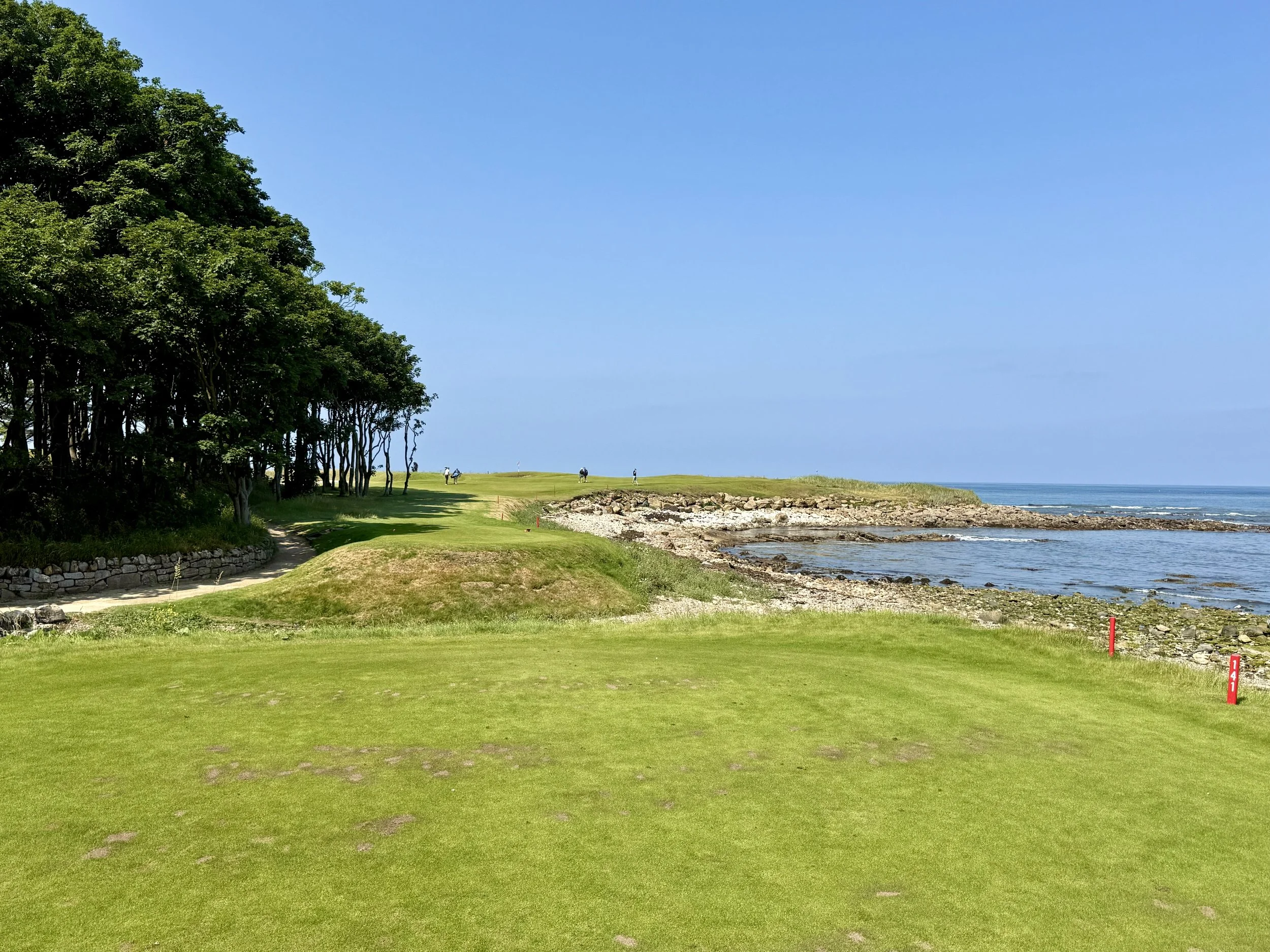
Day 13: Kingsbarns, 10:00am. Fifteen minutes down the coast road, ranked in the world's top 100, the sea visible from nearly every hole, and, I'll say it plainly, the favorite round of the entire trip. Exquisite is the word. The caddies were terrific, names on their vests Carnoustie-style, and the grill inside is worth staying for after the round. It was also the correct choice for a finale: modern enough to be generous, beautiful enough to feel like a celebration. One planning note: Kingsbarns closes from November through March, so a shoulder-season trip needs to check the calendar before building a leg around it. Celebratory dinner at Rao's.
Planner's note: sequence the finale. Kingsbarns last was deliberate. Carnoustie punishes; Kingsbarns rewards. Ending on the hardest course of the trip sends you home bruised. Ending on the most beautiful one sends you home planning the next trip. Order your rounds like a tasting menu, not an alphabetized list.
How I'd rank the courses
Kingsbarns - The favorite, stated plainly. Exquisite from the first tee to the grill room.
Carnoustie - The examination. The hardest course of the trip, and the round I'd most want back for another try.
Turnberry - The setting is nearly unbeatable, scotch on the first tee included; the price asks a lot of it.
North Berwick - A ton of character, and quirky in all the best ways. The warmest welcome in Scotland.
The New Course, St Andrews - Good enough to play twice in three days, which is its own review. The caddies are right about it.
Royal Troon - History everywhere, 99 bunkers, an eerie old seriousness. Respect more than love.
Dunbar - A pleasant tier-two round in tier-one company. Glad I played it once.
Leg five: London out (Days 14 to 16)
Early return of the car at Edinburgh Airport (depart St Andrews by 7:00am, allow the full margin with golf bags), a short flight south, and two London days with friends before flying home. The same landing-leg logic in reverse: the trip ends with a soft exit, not a sprint to a gate.
How much does a golf trip to Scotland cost?
Our sixteen-day trip cost £19,900 to £20,900 for two on the ground, excluding airfare, with eight rounds at Scotland's best courses, caddies included; a humbler version of the same golf runs thousands less. Here's the transparency most golf travel content avoids, itemized for two:
Green fees, eight rounds for two: Royal Troon £790, Turnberry £850 on the resort guest rate (£425 a head, one of the quiet perks of sleeping on property), North Berwick £640, Dunbar £450, Carnoustie £720, the New Course £161 per person (£322 for two, pull carts included), £644 across our two rounds, Kingsbarns £972 (the card's most expensive line). Total: £5,066 for two, or about £317 per person per round.
Caddies: £1,440, a caddie each across six rounds at £120 per bag (£80 fee, £40 tip); the two New Course rounds we walked with pull carts. Optional everywhere, and the best money we spent at Carnoustie and Kingsbarns.
Hotels, 15 nights: Turnberry £774/night for two nights, Radisson Collection Edinburgh £2,505 for four nights (about £626/night), Rusacks St Andrews £3,756 for four nights (about £939/night, and worth it). The Cotswolds and London nights were with friends; budget for a village inn and a London hotel if your version needs them.
Rental car, 10 days: £1,181 prepaid, plus a single £74 tank of fuel across the whole Scottish route (BMW X3 class, Glasgow pickup, Edinburgh drop)
Chauffeur transfers, four legs (Heathrow to the Cotswolds, Cotswolds to Birmingham, and the two London airport runs): £1,223 total, before tips
Internal flights for two: Birmingham to Glasgow £302, Edinburgh to London £229
Flights, LAX to Europe and home, business class both ways: £0. We flew entirely on points, the product of two years of deliberate accumulation across two credit cards. Points strategy is its own discipline and this isn't the post for it; the planning lesson is simply that the transatlantic legs are the one line item you can potentially remove from this budget years before you take the trip if you are strategic about it.
Dinners and the rest: we ate and drank heartily and make no apology for it. Dinners for two ran £120 to £200 most nights before the bars had their say; across the trip, budget £2,500 to £3,500 for two if you intend to enjoy Scotland the way Scotland intends to be enjoyed. It compresses easily if your habits are gentler than ours.
The total, on the ground, for two: £19,900 to £20,900, excluding transatlantic airfare (ours was points). Two honest notes on that number. First, it's a five-star version: the green fees are what they are, but the hotels and the dinners are where this budget flexes, and the same eight rounds with guesthouse lodging and gentler evenings would run thousands less. Second, every pound of it was visible to us before we spent it, which is the entire argument for planning a trip this way: no bundle, no markup buried in a package rate, and nothing paid for that we didn't choose.
What I'd change
Honestly, after months of planning, only two things, and I'd repeat everything else exactly.
The Edinburgh base. Covered in full in the East Lothian leg above: four nights on the Royal Mile bought us a great city and cost us the peace a golf trip runs on. Next time it's the Marine in North Berwick, with Edinburgh demoted from home base to day trip.
Dunbar. A pleasant round that couldn't hold its slot against this field.
That's the list. The route logic, the base-camp structure, the landing days, the sequencing of the rounds: all of it I'd do again without touching.
The trip you've been promising yourself
This trip took me months to plan: the ballot mechanics, the visitor-day rules, the tee time release calendars, the sequencing, the hundred small confirmations. I loved every hour of it, which is exactly why Linksbound exists, because most people wouldn't, and they shouldn't have to.
If a trip like this one is on your list, start with a Linksbound consultation: ninety minutes about your group, your game, and what would make the trip yours, ending with a written framework you keep either way. It's $200, and it credits in full toward your planning fee. [Link: Book a consultation]