
PGA West, the Home Game
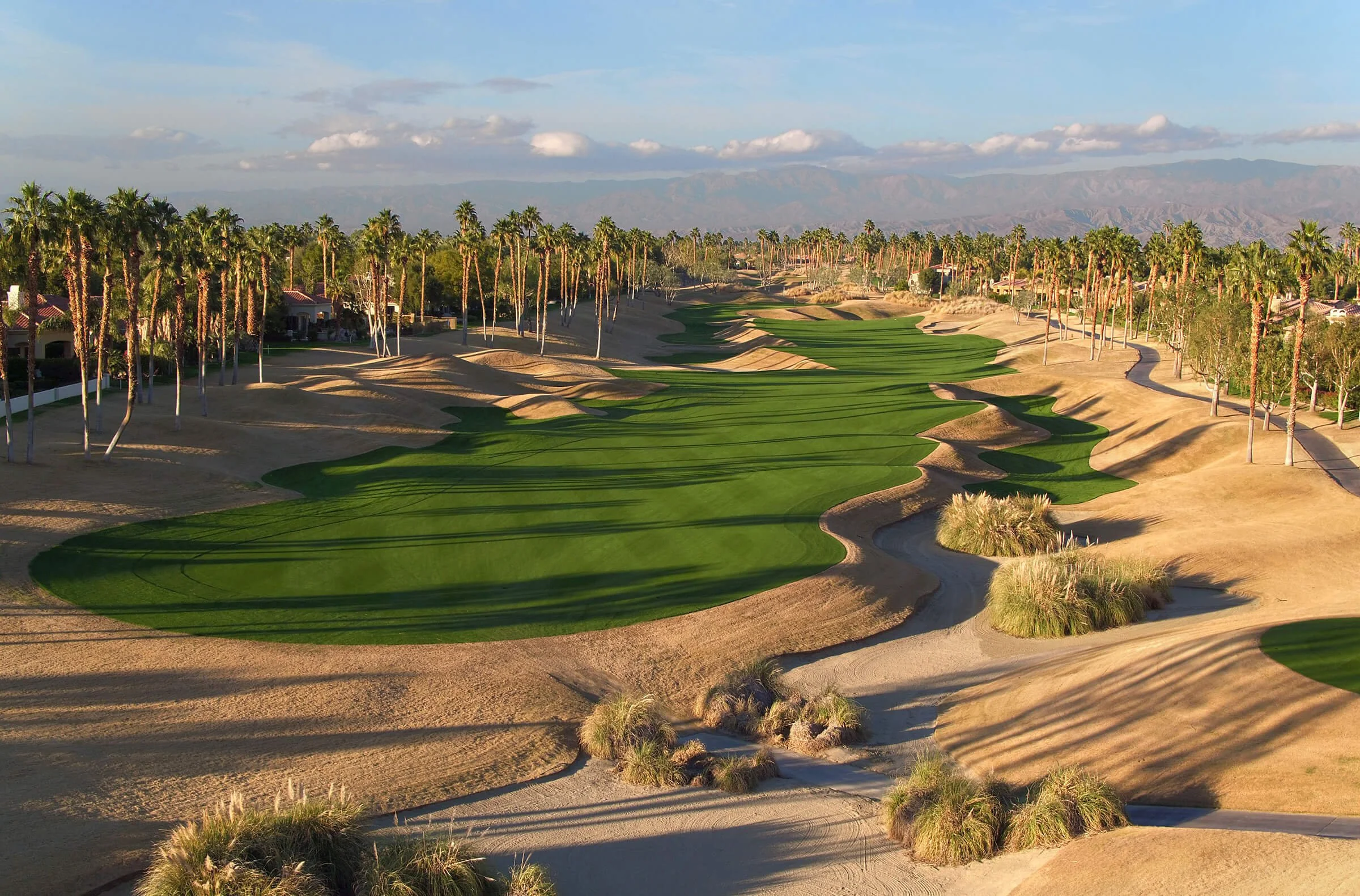
Every golf obsessive has a course that doubles as a family album. Mine is PGA West. For years, my dad and I had a standing ritual: fly into the desert the day after the Masters, when the golf year felt wide open, and play three straight days at PGA West, 36 holes a day. The trip I'd tell a stranger about first: after 107 holes across those three days, our total scores were dead even standing on the final tee, and the whole vacation came down to one hole. I beat him on 18, and he conceded the week the way he always did when I got him: genuinely happy for me. He's a great dad like that. Add the buddies trips that stacked up across the years, and the fact that I now live twenty minutes away in Palm Springs, and this is the course I've played more than any destination on my ledger. What follows is the local's version of the guide: what PGA West actually is, why the Stadium course is special, and why I think the property's best days are in front of it.
What PGA West actually is
PGA West is the sprawling multi-course complex at the south end of La Quinta, sister property to the historic La Quinta Resort, with three resort-playable courses, the Pete Dye Stadium, the Jack Nicklaus Tournament, and the Greg Norman, alongside three private members' courses (the Palmer, the Nicklaus Private, and the Weiskopf), with the La Quinta Resort's two Dye courses, the Mountain and the Dunes, in the same family up the road. It's a PGA Tour venue every January, when The American Express plays the Stadium and Nicklaus Tournament courses, which means the trip pitch writes itself: this is tour-stop golf that ordinary golfers can actually book.
The Stadium course
Pete Dye built the Stadium course to be televised, and if you're of a certain age, it was: the Skins Game lived here from 1986 through 1991, and I grew up watching it, which means my first round on the Stadium felt less like playing a course and more like walking onto a set I'd memorized. The most famous shot in the course's history happened on that set: Lee Trevino's hole-in-one on the 17th at the 1987 Skins Game, worth a $175,000 carry-over skin. The island-green 17th, Alcatraz, is the shot everyone comes for, and here's my honest record on the hole Trevino aced: I've never put a ball in the water. Hit the green every time. It's the rare famous shot that fears me more than I fear it, and I intend to keep the streak exactly as fragile as that sentence makes it sound. But the course's real character is Dye at full theatrical strength: railroad ties, moonscape bunkers, greens defended like arguments. It's hard, and it's fun-hard, the kind of difficult that makes a buddies group louder instead of quieter.
The case for desert golf
Desert golf gets typecast as target practice between condos, and some of it is. PGA West is the counterargument: wide corridors off the tee, firm turf that rewards the ground game in winter, mountain backdrops in every direction, and the particular pleasure of playing in shirtsleeves in January while the rest of the country scrapes windshields. It's also the most reliable golf weather in America for five months a year, which is exactly what a group planning months ahead is actually buying. The honest asterisk lives on the calendar: the desert peaks January through April, October through December is the pleasant shoulder, and the summer furnace is a no; the when-everything-peaks chart covers the full year.
Where the property is headed
Here's the part a local hears that a visitor doesn't: the ownership has been putting serious, visible money into PGA West, and the direction of travel reads long-term, investment in the product because the owner wants the place to be great, not dressed-up-for-sale. I'll label that for what it is, local knowledge rather than a press release, but it matches what you can see on the ground, and it matters for trip planners: properties in reinvestment mode get better every season you come back.
Building the trip
The buddies-trip math here is strong: multiple courses inside one gate, stay-and-play through the resort and the historic La Quinta Resort up the road, January-through-April weather certainty, and a tour course as the anchor round. Book it like a peak-season trip, because it is one: the snowbirds own the winter tee sheets, and the good windows go early. If the desert is calling, the consultation turns the idea into a plan: ninety minutes, $200, credited in full toward your planning fee.