
The Eleven Decisions That Price a Scotland Golf Trip
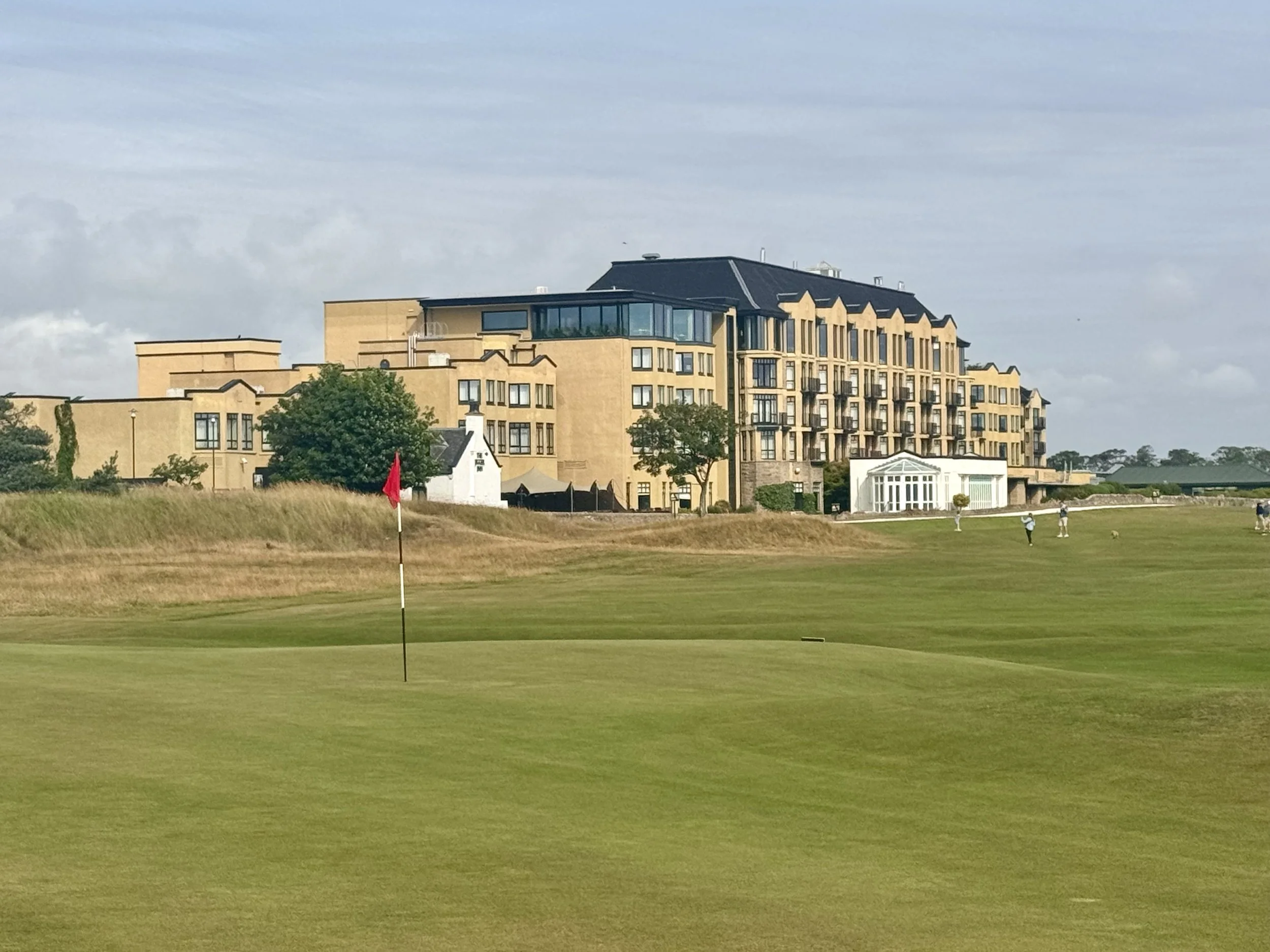
St. Andrews golf and hotel
Most golfers plan Scotland backwards. They start with a budget, hand it to an operator, and receive whatever golf fits inside it. The trips that people talk about for the rest of their lives get planned in the opposite direction, and the difference comes down to eleven decisions, made in an order that most itineraries never follow.
This is the framework I walk through with every client, in the sequence that actually works. The logic underneath all of it is the same idea that runs through everything I publish: the golf is the fixed cost, and everything else is a dial. You set the fixed cost deliberately, first, and then you tune the dials until the number is yours.
Decision one: the must-play card
Before dates, before budget, before anything: which courses would you cross an ocean for? Write the honest list. The Old Course. Turnberry. North Berwick, if you know, and you should. Carnoustie, if you want to be tested. Kingsbarns, if you want to be spoiled.
This comes first for two reasons. The practical one: the card determines everything downstream, because the courses determine the regions, the regions determine the driving, and the driving determines the shape of your days. You don't choose between Ayrshire, East Lothian, and Fife; your list chooses for you. The deeper one: a trip planned from excitement gets protected. When the calendar gets tight and the budget conversation gets real, the trip that started as a list of dream courses survives, and the trip that started as a spreadsheet gets postponed another year.
Set the card in the Scotland trip calculator and watch the trip take shape around it; that's the tool doing exactly what this decision does.
Decision two: lead time and season
The second decision is when, and it has two layers that most planning skips.
Lead time first, because the calendar is stricter than golfers expect. The Old Course's advance application runs its window in September for the following season. Muirfield takes visitors on Tuesdays and Thursdays and books far ahead. The famous tee sheets, the good rooms in the golf towns, and the sane airfares all reward the year-out rule: the best trips get skeletoned twelve months early, even when the details come later. And one calendar warning for the next few years: The Open returns to St Andrews in 2027, closing the Old Course to visitors from mid-June to mid-July and tightening everything around it, which makes 2028 and 2029 the smart target years, the full access strategy is here.
Then season. Peak summer, June through August, buys you daylight past nine and full rates. The shoulders, April to May and September to October, buy softer prices and what many of us quietly consider the best golf weather Scotland offers; our research across the full course list shows shoulder green fees running about 20% below peak, with lodging falling further. September light in East Lothian is not a consolation prize. It's a reward for planning.
Decision three: how many days, and how many of them are golf
Here's the constraint that actually shapes most trips, and the reason it comes third rather than tenth: you can only take so much time away from work and family. Lock the trip's length early, because everything downstream, the regions you can honestly cover, the pace, and the cost, flows from it.
Then protect the rest days. The instinct is to treat golf-free days as waste, to compress eight rounds into seven days and call it efficiency. The golf-free days are the ones holding the golf up. A links round in wind is a physical event, and the appetite to cram in as much golf as possible is the right appetite; the body just gets a vote, and the rhythm that satisfies both is three rounds in three days, then a rest day, then back to three in a row. The rest day isn't less golf. It's what keeps the sixth round feeling like the first. The rule I hold clients to: shorten the trip by cutting scope, never by cutting breath. A seven-day trip at the right rhythm beats a ten-day trip stretched thin, every time.
Decision four: the budget, now that it means something
Notice what just happened: budget arrives fourth, after the card, the calendar, and the length exist. That's deliberate, and it's the framework's core argument. A budget set before the trip has a shape is just a number you're afraid of. A budget set after decisions one through three is a real conversation: here is the golf you actually want, here is what it fixes in place, and here are the dials, lodging, transport, dinners, caddies, that tune everything else to your number.
Knowing the budget early still matters, and I ask for it plainly, because if the number and the card genuinely can't meet, better to redesign the card in week one than to discover it in month six. The honest range, per person: a lean, superb five-round Fife week runs about £2,900 (~$3,700); the full sixteen-day, three-region, five-star version runs about £10,400 (~$13,300); and the same eight-round trip lands anywhere from £4,800 to £8,900 a head depending entirely on the dials. [The complete breakdown, three builds of the same trip, is here], and every figure is budgeted deliberately high, so surprises run in your favor.
Decision five: the Old Course question
If the Old Course is on your card, and it usually is, you owe yourself one honest conversation before anything gets booked: does your trip need to guarantee it, or does your trip need a real, well-played chance at it?
The ballot-and-application routes cost nothing beyond planning discipline, and a properly built St Andrews stay, several nights, every draw entered, the singles strategy if you can play as one, gives you genuinely good cumulative odds; [the full door-by-door strategy is here]. Guaranteed times exist too, through a small circle of authorized operators, at four figures per person and 15 to 24 months of lead time.
And here's where I'll tell you exactly where I stand, because it defines what kind of shop this is: if a guarantee is the requirement, I'm not your guy. Linksbound doesn't broker guaranteed Old Course times, and the operators who do will serve you well at their price. What I build instead are ballot-resilient trips: itineraries designed to win either way, where the Old Course is the bonus and never the rescue. We missed the singles draw on our own trip, played the New Course twice, walked the Old on Sunday evening with the whole town, and flew home with nothing to regret. That's the trip I know how to build.
Decision six: group size
The group is a planning input, not just a guest list. Tee sheets think in fourballs, so eight golfers means two tee times at every course and twice the booking surface; five means somebody's a single some days, which is its own puzzle; two travelers share one room and one car, which is why every per-person figure I publish assumes a pair. Solo travelers pay the solo pad on rooms and the car while the golf costs the same, worth knowing before the math surprises you. Lock the roster before the booking season opens, because a group that grows after the tee times are set is a group that plays split courses.
Decision seven: where you sleep
Lodging is the biggest pure-comfort dial, and it runs from golf-town guesthouses at roughly £100 a night per person sharing, through the three-to-four-star tier around £200, to the five-star houses at about £395.
Two pieces of hard-won judgment here. First, location beats luxury: a room in the golf town itself beats a palace forty minutes away, which is a lesson we paid to learn when we based in downtown Edinburgh and would choose the Marine in North Berwick every time from here on, same money, better trip. Second, at the top tier, know the Turnberry rate trick: sleeping on property the night you play the Ailsa unlocks the resort guest rate, £425 a head against a visitor rate near £1,000, which means the room premium claws a real share of itself back on the tee sheet. At the top of the market, the wins come from knowing which £650 a night buys peace and which buys parking.
Decision eight: getting around
The clubs dictate the vehicle. Two golfers, two travel bags, and two sets of sticks do not fit in the economy hatchback the rental site defaults to, so the honest baseline is a proper SUV or estate at about £100 a day plus fuel, split across the car. Two golfers per vehicle is the planning ratio. And before anyone books a car, ask the question groups tend to skip: who's actually comfortable driving on the left? It's a genuine adjustment, the roundabouts, the narrow coastal lanes, the wrong-side instincts at every junction, and entirely doable for a skilled, confident driver; it's just a decision to make honestly at the planning table rather than discover at the rental desk. The chauffeured alternative runs about £700 a day for the vehicle, a luxury for a pair, increasingly rational arithmetic as the group grows, split eight ways it's under £90 a night each, and the right call at any size if nobody wants the wheel; nobody argues about who's driving home from the pub, either.
Decision nine: caddies
At £120 a bag including the tip, caddies are a real line item on a multi-round trip, and the strategic answer is rarely all-or-nothing. Spend them where they earn it most: the courses where the lines aren't obvious and the greens don't explain themselves. Carnoustie and Kingsbarns repaid every pound of ours; the New Course with a pull cart was a joy unassisted. Caddies on the marquee rounds, carrying the rest, is the pattern I recommend to most groups, and even one caddied round turns a lean trip into a designed one.
Decision ten: book it yourself, or have it handled
This is also where I should be transparent about how I work, because it shapes the advice: I'm paid only by you, never by hotels or courses, so nothing in the plan is steered by a commission. The planning fee buys the complete plan and playbook; if you'd rather not run the phones, the Booking Service add-on has me execute every reservation, deposit, and confirmation. The plan itself is identical either way.
Decision eleven: the Order of Play
The final decision sounds optional and defines more trips than any lodging choice: is this trip a competition? For buddies trips especially, the answer should be settled before the first tee, not negotiated nightly over dinner. Formats that fit the week, foursomes, four-ball, singles matches, a Ryder Cup-style points race, handicapping that keeps every player alive through Sunday, and standings that settle something. It's enough of a craft that I built it as its own service, the Order of Play, and enough of a trip-maker that I'd tell you to decide it deliberately even if you never hire anyone: the difference between eight rounds of golf and one week-long match is the difference between a good trip and a legend.
The eleven decisions, made in ninety minutes
Here's the honest summary of what you just read: this framework is the Linksbound consultation. Ninety minutes, your group, these eleven decisions in this order, ending with a written framework you keep whether we ever work together again. It's $200, and it credits in full toward your planning fee. The courses are the fixed cost. Everything else, we'll set together. Book a consultation