
How to Play the Old Course at St Andrews: Every Door In, Ranked by Odds
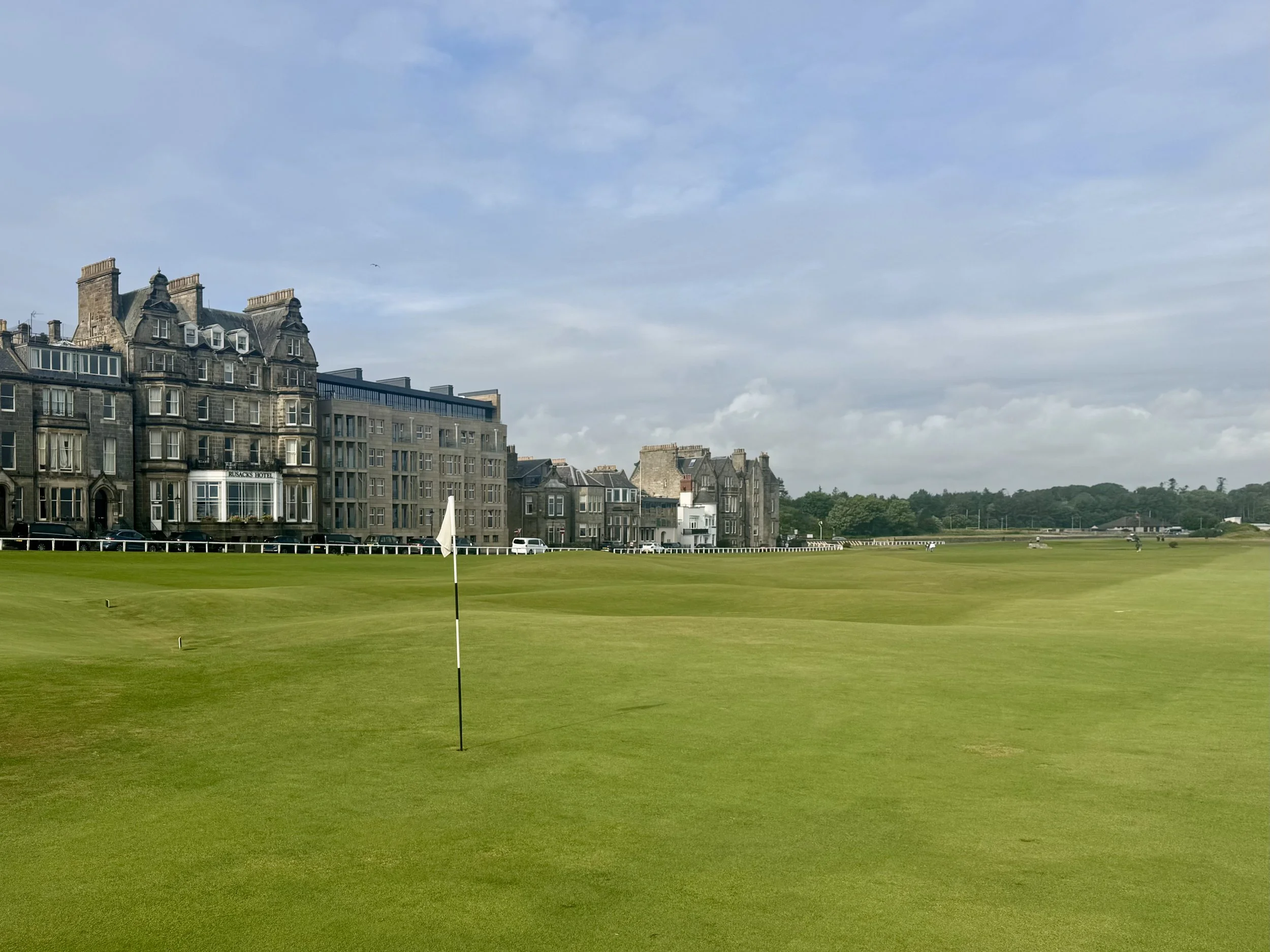
The eighteenth hole at the Old Course at St. Andrews
The Old Course is the hardest tee time in travel golf, and most of what's written about getting one covers a single route as if it were the only one. There are five, they differ enormously in odds, cost, and lead time, and the right strategy usually stacks more than one. I went to St Andrews last July with a strategy, went through the hardest door myself, and stood on the standby list long enough to learn things the guides don't tell you. Here is the complete picture.
One rule before the doors: the Old Course is closed for play every Sunday. It becomes a public park, the town walks its dog on the first fairway, and you should walk it too, because it's the best free thing in golf. But no Sunday plans.
Door one: the advance application, the calendar door
Once a year, in late August and early September, the St Andrews Links Trust opens applications for the following season's advance tee times. It's a lottery, not a queue: you apply with your dates, winners are drawn, and results arrive in the autumn. Two things decide your odds. First, flexibility: applying across a one-to-two-week window beats naming a single day, and avoiding the flagged busy dates helps more. Second, simply being in the draw at all, which most travelers miss because the window comes and goes eleven months before the trip they haven't started planning.
The application now has a name and a price tag: the Swilcan Package. For 2026 it ran £700 per person in high season and £530 in the shoulder months, and here's what a winning draw buys: guaranteed tee times on two courses over consecutive days, one of them the Old, plus dining and retail credits at the Links. Applying costs nothing, groups of up to four can enter, and successful applicants get two weeks to pay. Run the math on a win: roughly £700 for the Old Course, a second Links round, and dinner at the clubhouse is the best value in this entire post, which is exactly why the draw is oversubscribed. And winter access gets a whole door of its own, below.
One more variant of this door, for the right wallet: St Andrews Links has run an Amex-exclusive application window (Platinum and Centurion members) for the following season's packages, typically opening in late August with about a week to apply. If you carry the card, watch for the email; it's one of the least-known routes to a guaranteed Old Course time.
This door is why the year-out rule exists for Scotland trips. If you're reading this in August or September and next summer is even a maybe, apply now and plan the trip around the result. If you win, you build the itinerary around a certainty. If you don't, you've lost nothing, and the next two doors are still open.
Door two: the 48-hour ballot, the group door
Roughly half of all Old Course tee times are held back and awarded by ballot two days before play. The mechanics, precisely: groups of two to four golfers enter before 2:00pm two days ahead of the day they want, online, by phone, or in person at the Old Pavilion, giving each player's name, home club, and handicap. Results post after 4:30pm the same day. Because the course closes Sundays, there's no ballot on Fridays.
Three tactics improve the odds. Enter every eligible day of your stay, since each draw is independent and a four-night St Andrews base buys you three or four chances; this is the quiet argument for basing in the town rather than day-tripping to it. Ask your hotel's golf concierge to handle entries, which the good St Andrews houses do as a matter of routine, sometimes before you've even arrived. And weight your trip toward the shoulder months, where demand thins and the same ballot pays out more often.
The Singles Daily Draw for the Old Course at St. Andrews
Door three: the singles daily draw, the best odds in the building
If you can play as a single, this is the strongest hand a walk-in can hold. Singles enter in person, at the Old Pavilion beside the first tee or at the Links Clubhouse, between 9:00am and 5:00pm the day before they want to play; a photo is taken at entry for identification, and the draw results arrive by text and email within the hour after 5:00pm. The honest odds, and this matches what the Links staff will tell you plainly if you ask: around one in ten on a summer day, better in the shoulders.
Here's what the guides skip: losing the draw isn't the end. Unsuccessful entrants are given a standby number and a time to report to the first tee pavilion, because tee sheets leak all day, no-shows, cancellations, groups of three where four were booked, and singles are exactly the shape that fits those gaps. I drew number 43 last July, which is not a winning number, and the £322 my partner and I spent on a same-day New Course walk-on instead was the entire cost of missing; the full story of that day is in the complete itinerary post. But the standby lesson stuck: I watched the mechanism work, and the move is to loiter. Report early, stay near the starter, be visibly ready with your clubs, and be the easiest yes in the building when a gap opens. A 12:45 standby estimate can become a 9:44 first tee, because golfers who aren't standing there when the gap opens don't get gaps.
Door four: the guarantee, the expensive certainty
A small circle of operators is officially authorized by the Links Trust to sell guaranteed Old Course tee times, and this door works exactly as advertised, at three costs worth understanding before you knock. Money: these packages run to four figures per person and typically require bundling additional Links courses into the reservation. Lead time: authorized allocations sell out 15 to 24 months ahead, so the guarantee door actually demands more planning runway than the application door, not less. And flexibility: you're buying their date, not yours.
I'll give you the same straight answer here that I give clients: a well-built strategy through the first three doors gives you real odds at a fraction of the price, and a well-built trip is great whichever way the draws break. But if a guarantee is genuinely non-negotiable for your group, a once-in-a-lifetime trip, a milestone that cannot hinge on a lottery, then the authorized route is legitimate, and the honest move is pricing it early and deciding with clear eyes, not resenting it later. If you want to see what the guarantee does to a trip's total before you decide, the Scotland trip calculator has a dial for exactly this.
Door five: winter package
The winter package: the door almost nobody talks about. Each June, the Links Trust opens booking for winter packages: guaranteed Old Course tee times for the November-through-March season at winter rates, bookable by groups from two to sixteen. The trades are real, short daylight, shots off portable mats, and proper weather, but it is a guaranteed round on the Old Course without an operator's four-figure package, and for a certain kind of golfer that math sings. The booking window is brief and announced by the Links Trust; it's exactly the kind of date the Planning Calendar exists to catch.
The 2027 warning, and the years around it
The Open returns to the Old Course in 2027, which means the course closes to visitors from mid-June to mid-July that year and availability around the championship is already restricted, with operator allocations constrained too. The two-year halo around an Open also inflates demand before and after. Translation for your planning calendar: 2028 and 2029 are the smart target years, and a 2027 St Andrews trip should be built ballot-resilient or aimed at the shoulders.
Stacking the doors: how a real strategy works
The doors aren't alternatives; they're layers. The full stack for a trip that wants the Old Course badly: apply in the advance window the autumn before. If that misses, base yourself in St Andrews for three or four nights and enter the 48-hour ballot every eligible day, through the concierge. If you can play as a single, enter the daily draw too, every day, and treat the standby list as a real fourth chance, not a consolation. Aim the trip at May, September, or early October, where every one of those draws pays out more often. And if none of it can be left to chance, price the guarantee eighteen months out and make the call deliberately.
Run that full stack across a four-night stay and your cumulative odds are dramatically better than any single entry suggests, which is the arithmetic most disappointed golfers never do.
The doctrine underneath: build the trip to win either way
Here's the deepest advice in this post, and it's about itinerary design, not lotteries. The New Course sits beside the Old, an Old Tom Morris design that would be the best course in most towns, holds times for day-of walk-ons, and cost us £161 a head with a pull cart included; what the whole St Andrews leg costs at three different builds is laid out in the costs post.The Jubilee and the Castle are right there too. Kingsbarns and Carnoustie are twenty and forty minutes away. A St Andrews leg built on those certainties, with the Old Course ballots running underneath all week, succeeds no matter what the draws do: the wins are a bonus, never a rescue.
That's what ballot-resilient means, and it's the difference between a trip that gambled and a trip that planned. We missed the singles draw on our Tuesday, played a second round on the New, walked the Old on Sunday evening with the town, took the photos on the Swilcan Bridge, and flew home with nothing to regret. The Old Course will be there. The trip only happens once.
The trip you've been promising yourself
Ballot strategy, application timing, and building the itinerary that wins either way is precisely the work of a Linksbound consultation: ninety minutes on your group, your dates, and how badly the Old Course matters to yours, ending with a written framework you keep either way. It's $200, and it credits in full toward your planning fee. Book a consultation