
Planning a Palm Springs Golf Trip: A Local's Guide
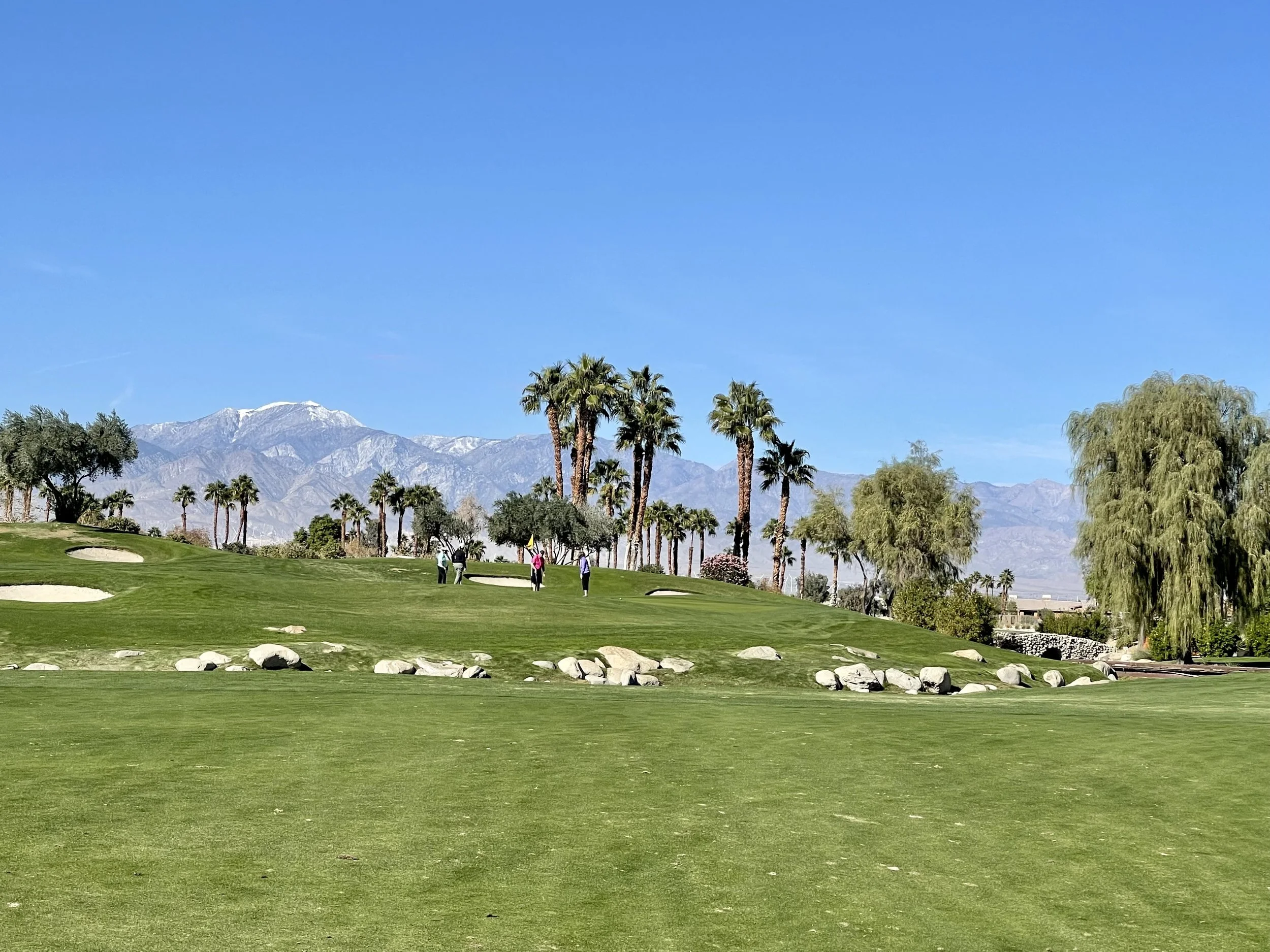
I planned desert golf trips for years before I lived here, five La Quinta trips on my ledger, and now I plan them from inside: I live in Palm Springs, twenty minutes from most of the tee sheets your group would be choosing among. That vantage changes what I think matters. Most Palm Springs trip guides read like a directory of courses; the trips that actually work get four decisions right first, the month, the taste of golf, the geography, and the booking clock. Here's each one, honestly.
When the desert peaks
The desert runs inverted from most of American golf, and the calendar is the first decision because it moves every price on the trip. January through April is the peak: flawless weather, full rates, and tee sheets owned by people who planned ahead. October through December is the pleasant shoulder: warm days and softer rates, with one asterisk a local knows to check: October is overseeding season here, when courses close on rotating schedules to reseed for winter and reopen with restrictions while the new grass takes. A November or early-December trip gets the shoulder pricing on freshly grown-in winter turf, which is why that stretch, not October, is my pick for value; an October trip just needs its course list checked against the overseed calendars first. May and June stretch the season for the heat-tolerant. And July through September is the furnace: I played one August trip here before I lived here, and the resident's verdict is that I wouldn't recommend it. If you do it anyway, electrolytes and very early tee times are your friends. The full year, mapped against every other great destination, is in the when-everything-peaks chart.
Three pieces of winter fine print the brochures skip. First, the frost-and-dew delay: January mornings start cold, the earliest slots carry real delay risk, and the first hour is the coldest golf of the day, so the mid-to-late-morning window is the local's play. Second, the daylight math: late-January sunset runs about 5:15 to 5:30, which makes the true golf day roughly 8:30 to 5. Thirty-six a day is doable in winter, but only if you take the first tee time of the morning and skip lunch, or eat it on the cart; the comfortable desert version is 18 plus an afternoon short course or a pool. Third, tournament week: The American Express takes over PGA West in mid-to-late January (January 18-24 in 2027), closing its tournament courses to visitors and heating demand across the valley on either side. The week right after the Amex is the sneaky-hot booking, tournament conditioning with TV-fresh demand and prices to match; wait another week and the same greens cost less.
How desert golf actually plays
Desert golf is its own style, and the cleanest description is target golf played through the air. The course lays out defined landing zones and green corridors across the desert floor, the dry air adds carry, and the game is aerial: you fly the ball to a spot, it mostly stays where it lands, and the trouble between spots, native desert, water, dramatic bunkering, punishes the miss rather than redirecting it. It's the exact opposite of the links golf I chase in Scotland, where the ground is the game and the air is the enemy; here the air is the game, which is part of why a desert trip feels like such a clean change of pace for a group that plays traditional golf at home. The vistas come with the geography: depending on where you play, the mountains sit behind the fairways like a backdrop wall, and the winter light on them is half the reason people come back. What varies from course to course is the degree: how much native desert pinches the corridors, how much water enters the argument, and how much view you're buying with the green fee. Most of the valley's quality courses play fair for a mixed-handicap group; the famous exception is the Stadium course at PGA West, which is hard on purpose and worth it anyway, a decision a group should make with its eyes open.
My must-plays
Every ranking is an argument, so here's mine: the courses I'd build a first visit around.
The Stadium course, PGA West. Tour-venue golf that ordinary golfers can book, Pete Dye at full theatrical strength, and the one course in the valley that's hard on purpose. Iconic hole after iconic hole, a brutal test, and there's nothing quite like playing the same holes you've watched the pros play on TV. My full local's guide to PGA West, including the Skins Game history and my record on the hole Trevino aced, is its own post.
The Nicklaus Tournament course, PGA West. The Stadium's tournament partner (the two share The American Express every January) and a beautiful course that's equal parts playable and challenging. The shared green on 9 and 18 is a fun touch.
The Mountain course, La Quinta Resort. Pete Dye's 1980 original for the resort, set against the striking Santa Rosa foothills. The vistas are constant, and the holes that border the rock feel almost cut out of the mountain itself.
The consensus tier, and an honest note
Four more courses belong in this conversation by reputation: SilverRock (Arnold Palmer's municipal at the base of the Santa Rosas, and a Bob Hope Classic home course from 2008 to 2011), the Players course at Indian Wells Golf Resort, Firecliff at Desert Willow, and the Pete Dye Resort Course at the Westin Mission Hills. The rankings rate all four, and here's the honest note a directory would never print: I haven't played them recently enough to give you a verdict I'd stand behind. I live twenty minutes away, so I'm replaying them this winter, and this list gets updated when I do. That's the deal with everything under my name: played it, or labeled it.
Where you sleep versus where you play
Here's the geography most first-time planners get wrong: "Palm Springs" is shorthand for a valley that runs twenty-plus miles, and the golf and the nightlife cluster at opposite ends. Palm Springs proper has the walkable downtown, the restaurants and bars, the mid-century hotel character, and comparatively little of the marquee golf (Escena is the notable exception, quality golf inside the city itself). Down-valley, Rancho Mirage, Palm Desert, Indian Wells, La Quinta, has the bulk of the big-name courses, resort-style lodging, and quieter evenings. Neither answer is wrong; they're different trips. Sleep in Palm Springs and you're trading 25 to 35 minutes of morning drive for better dinners. Sleep down-valley and the golf is out your door while the evenings run resort-quiet. The deciding question is what your group's 7 PM looks like: out at a table downtown, or around a fire pit at the property.
One more split inside Palm Springs itself: the traditional full-service hotels carry the room inventory and the big pools a group needs, while the mid-century boutiques that give the town its character often run 15 to 40 rooms, small enough that a group of singles approaches a buyout, which is either the trip's best feature or exactly wrong depending on your group. And whichever style you choose, watch the resort fees: $30 to $50 a night is common here, and across a group and a long weekend it quietly eats real budget.
The booking clock, and the windows nobody publishes
The desert's winter is peak season, and it books like one: the snowbirds hold standing tee times, the good group lodging goes early, and a January or February trip wants its direction set by October, lodging first, because rooms are the scarcer resource. But the mechanics underneath are what most groups never learn, and they decide who ends up with the good tee sheets.
Public booking windows are short. Most of the valley's quality public courses open tee times only 30 to 60 days out (Desert Willow's public window, for instance, is 60 days), which means a January trip literally cannot lock its rounds in October through the public engines. The groups with confirmed times got them another way.
The other ways: the group desk and the room. Two foursomes or more is group-desk territory at the resort tier, booked months ahead through a coordinator with a deposit, outside the public window entirely. And the oldest rule in destination golf runs the desert too: the room unlocks the tee sheet. La Quinta Resort guests, to take the biggest example, can book tee times on the resort's and PGA West's courses up to 365 days in advance, a full season before the public window opens. Sleeping at the right property is a tee-time strategy, not just a lodging choice.
And the prices move by the hour. The marquee courses run dynamic pricing with a dramatic intraday swing: the same winter day on the Stadium course has carried roughly $400 mid-morning slots and $112 twilight ones (observed rates from recent peak seasons; the booking engines are the final word for your dates). Peak season rewards groups that know which hours they're buying, and the mid-morning slots the frost-delay math recommends sit near the top of the curve, which is exactly the kind of trade a plan should make on purpose.
What a group week costs
Honest ranges rather than false precision, and your group's choices swing every number: peak-season green fees run from roughly $100-200 at the quality mid-tier to $300-400 for a prime morning slot on a tour-venue anchor round (observed winter rates from recent seasons; dynamic pricing means the engines are the final word), winter lodging spans from around $200 a night at good non-luxury properties to several times that at the resorts before resort fees, and the shoulder months discount both meaningfully. A three-round, three-night group trip built quality-first without the luxury tax is achievable in the low four figures per player at peak; the same trip in November costs noticeably less. The biggest levers, in order: the month, single versus shared rooms, and how many anchor-course rounds you buy versus quality mid-tier.
The local's closing argument
The desert is the most reliable golf weather in America for most of the year, which is exactly what a group planning months ahead is actually buying: certainty. No weather contingency days, no rain plans, just tee times that happen. Add short flights from most of the country, one gate for the whole group at PSP, and evenings that are their own reason to come, and it's the easiest great golf trip in the country to get right, provided the four decisions above get made in the right order.
If a desert trip is forming, the consultation turns it into a plan: ninety minutes on your group, your month, your taste, and your budget, ending with a written framework built for your actual trip. The $200 credits in full toward your planning fee, and you'll be planning with someone who can see the mountains from his desk.