
When to Go: The Scotland Golf Season, Month by Month
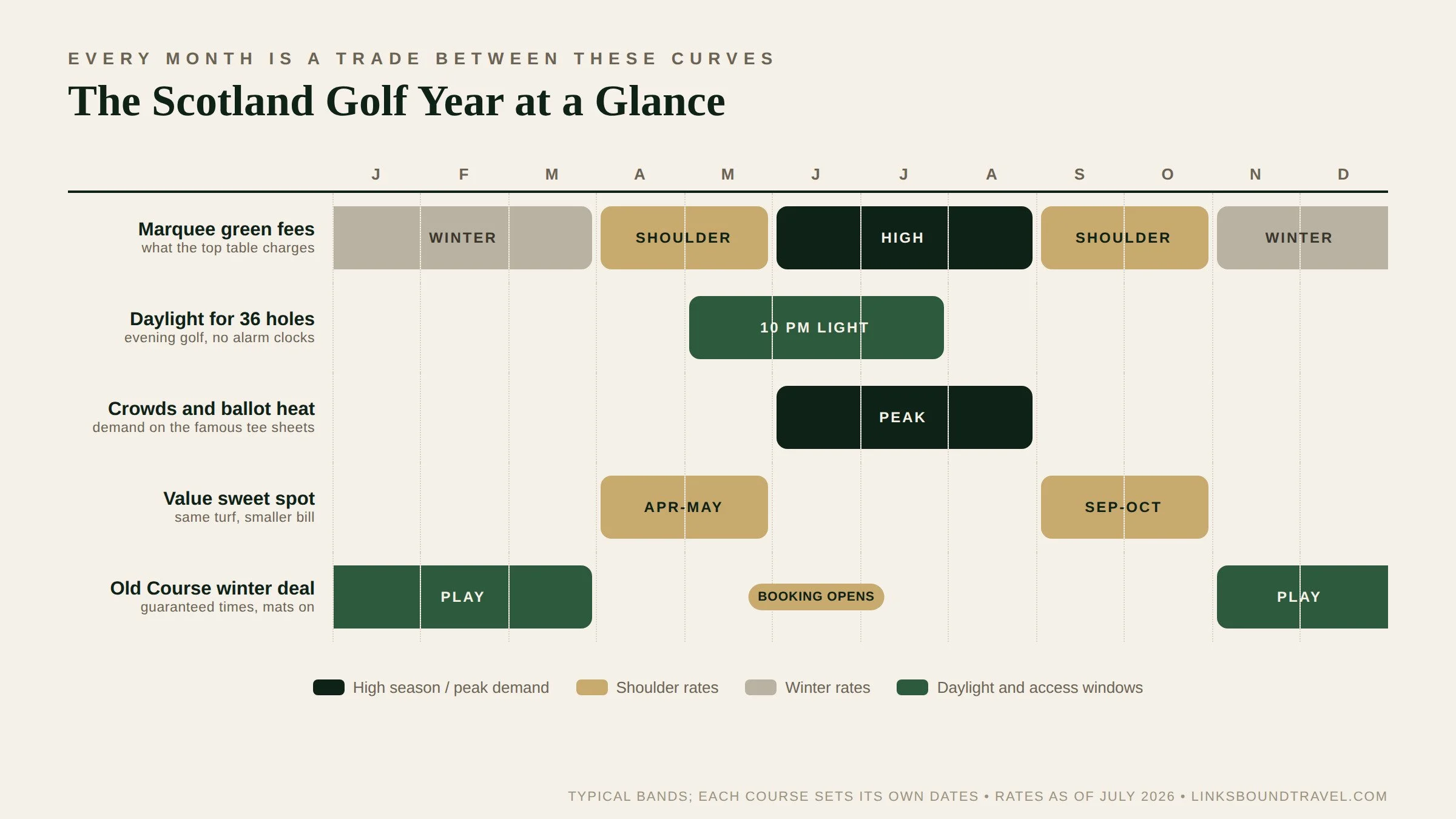
Here's the short answer before the long one: for most groups, late May through June and September are the sweet spot, July and August buy you daylight and atmosphere and charge you for both, April and October are the value plays for the flexible, and winter is the strangest bargain in golf, which we'll get to.
One honesty note before the calendar: I've played Scotland in July, sixteen days of it, so that month comes with receipts. The rest of this guide is built from published rates, course calendars, and the research that runs our planning work, labeled as such. Rates as of July 2026.
How the tee sheet prices the year
Scottish courses run their rates in seasonal bands, and the bands are where your money is actually decided. High season generally runs June through August, when the marquee courses charge their full published number: the Old Course green fee sits at £320 (~$410) in high season, and the rest of the top table prices with similar confidence. Shoulder season, roughly April to mid-May and late September through October, runs meaningfully cheaper at many of the same courses, commonly 20 to 40 percent below peak depending on the venue, with the same turf and shorter queues. Winter, November through March, is its own country: reduced rates, mats off many tees, and access deals that summer golfers never hear about.
The daylight moves opposite to the price. In late June you can tee off at 6 in the evening and finish in golden light before 10, which is how 36-hole days happen without alarm clocks. By late October you're racing a 4:30 sunset. Every month below is really a trade between those two curves.
The calendar, month by month
November through March. Winter golf is real golf in Scotland; the links drain fast, the frost delays burn off, and the courses that stay open charge a fraction of summer. The trade: short days, mats on many tees, and weather you accept rather than plan around. The reason to book it anyway gets its own section below.
April. The value month for the cold-tolerant. Shoulder rates, courses waking up, and the first properly playable evenings. Wind is the tax.
May. The insider consensus month: shoulder or early-season rates at many courses through mid-May, the gorse in bloom, daylight stretching past 9, and demand still a step below summer. If your group can travel in May, most of the arguments end here.
June. Peak daylight, peak turf, and the start of peak pricing. The longest days of the year make it the month for gluttons: 36 holes without hurrying, evening rounds as a second act. Book a year out; June tee sheets fill first.
July. The month I can vouch for personally. Know that July is also when the ballot runs hottest; the Links Trust doesn't publish odds, but demand logic is demand logic, and our trip entered every eligible day without a draw. Plan July around an each-way structure, not a single lottery.
August. July's twin for daylight and price, with the Edinburgh festivals inflating everything within an hour of the capital. If your itinerary leans East Lothian or Fife, August lodging wants extra lead time.
September. The planner's favorite. High-summer turf with the crowds thinning, rates beginning their shoulder descent at many venues by mid-month, and weather that historically holds. If May doesn't fit your group, September is the answer.
October. The gambler's shoulder month: real value, fiery autumn color on the gorse and bracken, and a genuine chance of getting four seasons before lunch. The daylight math starts to bite; plan morning golf and afternoon towns.
The winter secret: a guaranteed Old Course tee time
Each June, the St Andrews Links Trust sells winter packages: guaranteed Old Course tee times for November through March at winter rates. Shots off mats on many holes, a wooly hat, and short days are the price; a guaranteed round on the most famous course in golf, without an operator's four-figure markup, is the prize. For a certain kind of golfer, that's the best trade on this entire page. The full door-by-door breakdown of Old Course access, ballot, application, singles line, and winter, lives in How to Play the Old Course.
Which month is your month
The honest matrix: if you want the trip photos and the 10pm light, June or July and pay the band. If you want the same courses at a discount and can carry a sweater, May or September. If the budget is the constraint and the group is hardy, April or late October. And if the Old Course guarantee matters more than the weather, winter, booked the June before.
One more thing worth knowing before you pick your month: Scotland's calendar is one column in a bigger table. The destinations trade places all year, Bandon peaks while the desert bakes, Streamsong peaks while Bandon storms, and if your group's window is fixed, somewhere is always in season. That's half of what the consultation is for.
Every one of those settings is a dial in the Scotland Trip Cost Calculator, which carries the seasonal rate bands for nineteen courses, so you can price the same trip in June and again in September and watch the gap. The full cost anatomy lives in What a Scotland Golf Trip Really Costs, and the sixteen-day July trip behind all of it is documented to the pound in the complete itinerary.
A range is a starting point, not a plan. The consultation turns it into one: ninety minutes on your group, your must-play list, and your month, ending with a written framework and a budget built for your actual trip. The $200 credits in full toward your planning fee.